
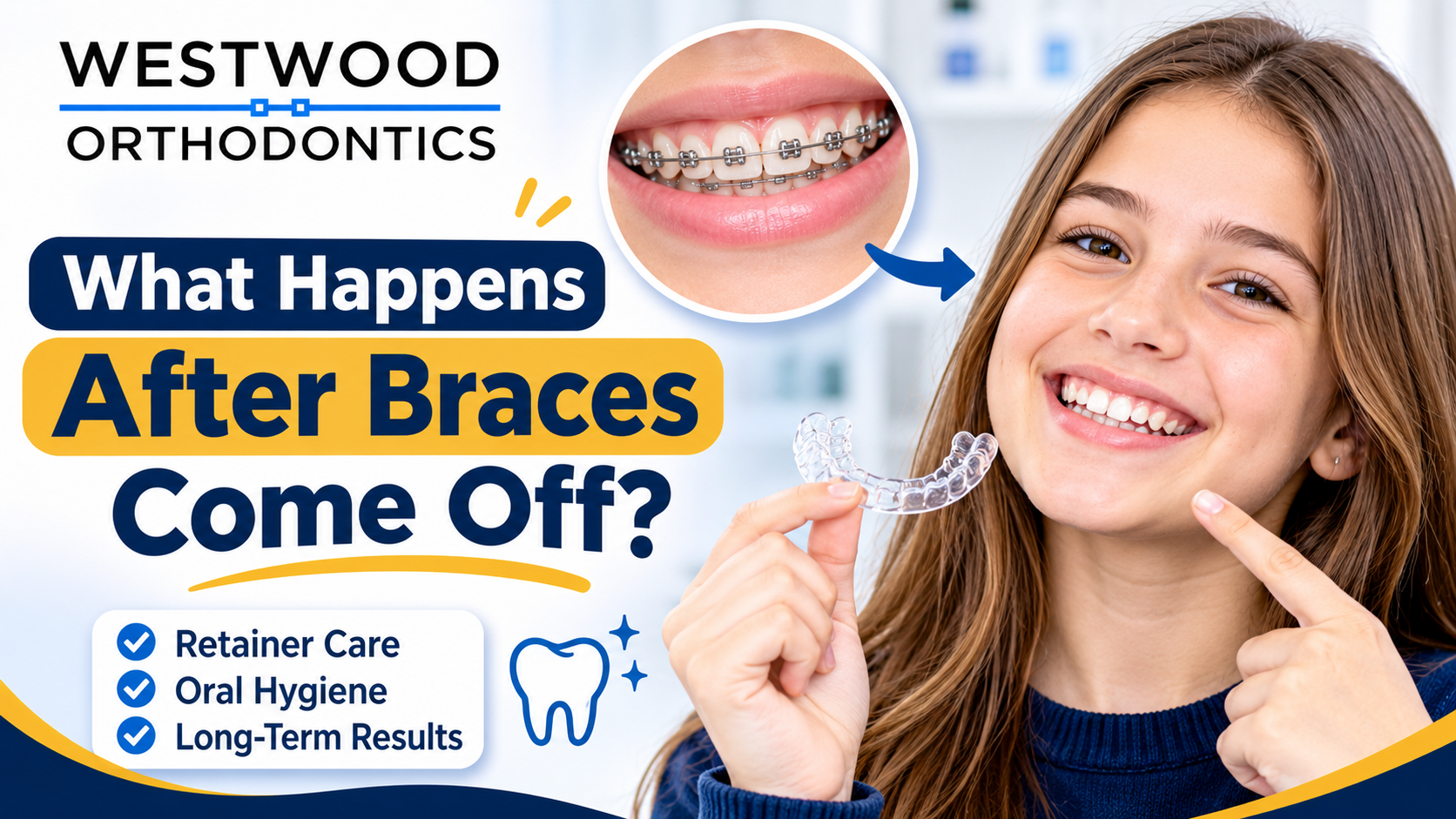
After your braces come off, your orthodontist removes the brackets and wires and polishes your teeth. They also fit you for a retainer to keep them in their new positions. Your teeth may feel smooth and a little sensitive for a few days. After that, wearing your retainer every day becomes a part of your routine.
Many patients are surprised to know that treatment doesn’t end when they remove their braces. This article explains what happens after your braces come off and why retainers are important. We also cover the different types, how long you should wear them, and how to care for them.
What Happens During a Braces Removal Appointment?
Your braces removal visit is usually quick and comfortable, and most patients leave with a smile. They may also take photos or scans to see how your teeth look. You will usually feel only minor pressure during the procedure. You may feel a little pressure or hear a clicking as the brackets come off.
Your orthodontist polishes your teeth until they feel smooth. After that, they may also take scans or X-rays to record your final alignment. They use these impressions or scans to make your retainer. After your visit, you may notice a few changes:
- Your teeth may feel extra smooth and slick.
- Your teeth and gums may feel sensitive to cold for a few days or up to a week.
- Your gums may look a little swollen at first, but good brushing, flossing, and gentle saltwater rinses can help them settle down.
- Your tongue, lips, and bite may need one to two weeks to adjust.
- Your teeth may feel slightly loose as the surrounding bone and tissues settle.
Why Do You Need to Wear a Retainer After Braces?
You need a retainer after braces because your teeth can move back to their old positions. A retainer keeps your teeth in place while the nearby bone and gums settle. According to the American Association of Orthodontists, the bone around your teeth stays flexible during treatment.
Without a retainer, your teeth can start moving back into their natural positions. A retainer protects the time and effort you already put into your smile. Even straight teeth can slowly shift out of place without a retainer. This might be frustrating after months or years of treatment.
What Types of Retainers Are Available?
You can choose from three types: clear removable retainers, Hawley retainers, and fixed (bonded) retainers. Your orthodontist can help you to choose the best for your teeth and daily routine.
1: Clear Removable Retainers
Clear retainers are plastic trays that fit over your upper and lower teeth. Many people like them because they are easy to wear and hard to notice. The AAO says clear retainers are lighter, more comfortable, and less visible than Hawley retainers.
2: Hawley Retainers
Hawley retainers use an acrylic base with metal wires and clasps. They are easier to see and may need some adjustments over time. A National Elf Service summary of a Cochrane review looked at 47 trials and 4,377 patients. It found that Hawley retainers were less likely to fail than clear plastic ones and had similar stability. The review also found that only a few studies followed patients for two years or longer. This makes it harder to draw clear conclusions.
3: Fixed or Bonded Retainers
A fixed retainer is a thin wire bonded to the back of your teeth, usually the lower ones. It stays in place all day, so you do not have to worry about forgetting to wear it. However, the wire can break or come loose, and flossing takes a little extra care.
How Long Do You Need to Wear a Retainer?

During the first few months, most people wear a removable retainer all day. After that, they usually only wear it at night. Many orthodontists recommend wearing your retainer at night for a long time to keep your teeth in place.
The AAO suggests wearing your retainer full-time for a few months before switching to nighttime wear. Ideally, you should wear it full-time. Your orthodontist will tell you how long you should wear your retainer, so follow their instructions carefully. A common plan is to wear your retainer full-time at first, then move to nighttime wear. However, every patient is different.
Why Do Teeth Shift After Braces?
Your teeth may move after braces because the surrounding bone and gums need time to settle. They may also shift because of normal aging, tongue habits, and the daily pressure of chewing. A retainer keeps your teeth in their right place. Your teeth may feel a little loose right after treatment as the surrounding bone and tissues settle. That is very natural. If you do not wear your retainer, your teeth may shift quickly. You may need more treatment later. If your retainer feels tight when you put it back in, your teeth may have moved.
How Should You Clean and Care for Your Retainer?
When you remove your retainer, use a soft toothbrush and mild soap to clean it. You can also use a retainer cleanser once a week. Avoid using hot water because it will bend the plastic. The AAO recommends cleaning your retainer with a separate toothbrush and some mild soap. They also suggest soaking it once a week for 15 to 20 minutes. Bacteria can grow, so clean your retainer every time you take it out. Here are some other good habits to follow:
- When you are not wearing your retainer, keep it in the case.
- Keep it away from heat and pets, and do not wrap it in a napkin.
- Brush and floss your teeth daily, and see your dentist for a cleaning every six months.
- Visit your orthodontist before using whitening strips or abrasive toothpaste. If your teeth are sensitive, wait a week or two before using them.
What Should You Do If Your Retainer Breaks or Gets Lost?
If your retainer breaks or you lose it, go to your orthodontist as soon as possible. Without it, your teeth may begin to shift within a few days. Do not try to fix it by bending or gluing it. Your orthodontist can repair it or make a replacement. The sooner you contact them, the easier it will be to resolve the issue. Keep any broken pieces and bring them to your appointment.
Frequently Asked Questions
Do You Have to Wear a Retainer Forever?
The AAO recommends wearing your retainer indefinitely, usually at night. Your orthodontist can tell you what schedule works best for you.
Can Teeth Move After Braces?
Without a retainer, your teeth can shift after braces. They may slowly move back toward their old positions. Even with a retainer, your teeth may move a little if you skip wearing it at night. That is why it is important to wear it regularly.
Can You Eat While Wearing a Retainer?
Take your removable retainer out before eating, then clean it and put it back in. A fixed retainer stays in place at all times. Avoid very hard or sticky foods that could bend or loosen the wire.
What Happens If You Stop Wearing Your Retainer?
Your teeth may start moving back to their old positions, leading to a relapse. Your retainer may feel too tight or too loose. You may need a new one or more orthodontic treatment. So, going back to wearing your retainer at night early on can sometimes help stop bigger issues.
Final Thoughts
After your braces come off, you will have a polished smile and may feel some sensitivity for a few days. Your retainer will help keep your teeth in place. Wear your retainer as directed and clean it daily. Keep up with your dental checkups, and see your orthodontist as soon as possible if it breaks. Wearing your retainer regularly helps keep your teeth in place. Regular checkups can also catch small problems early. Westwood Orthodontics is here to help you even after your braces come off. Schedule your consultation with Westwood Orthodontics today.

Westwood Orthodontics
A Smile Can Change Everything
Braces & Invisalign for kids, teens & adults in Los Angeles, CA. Board certified orthodontists — schedule your free consultation today!
Schedule Free Consultation