
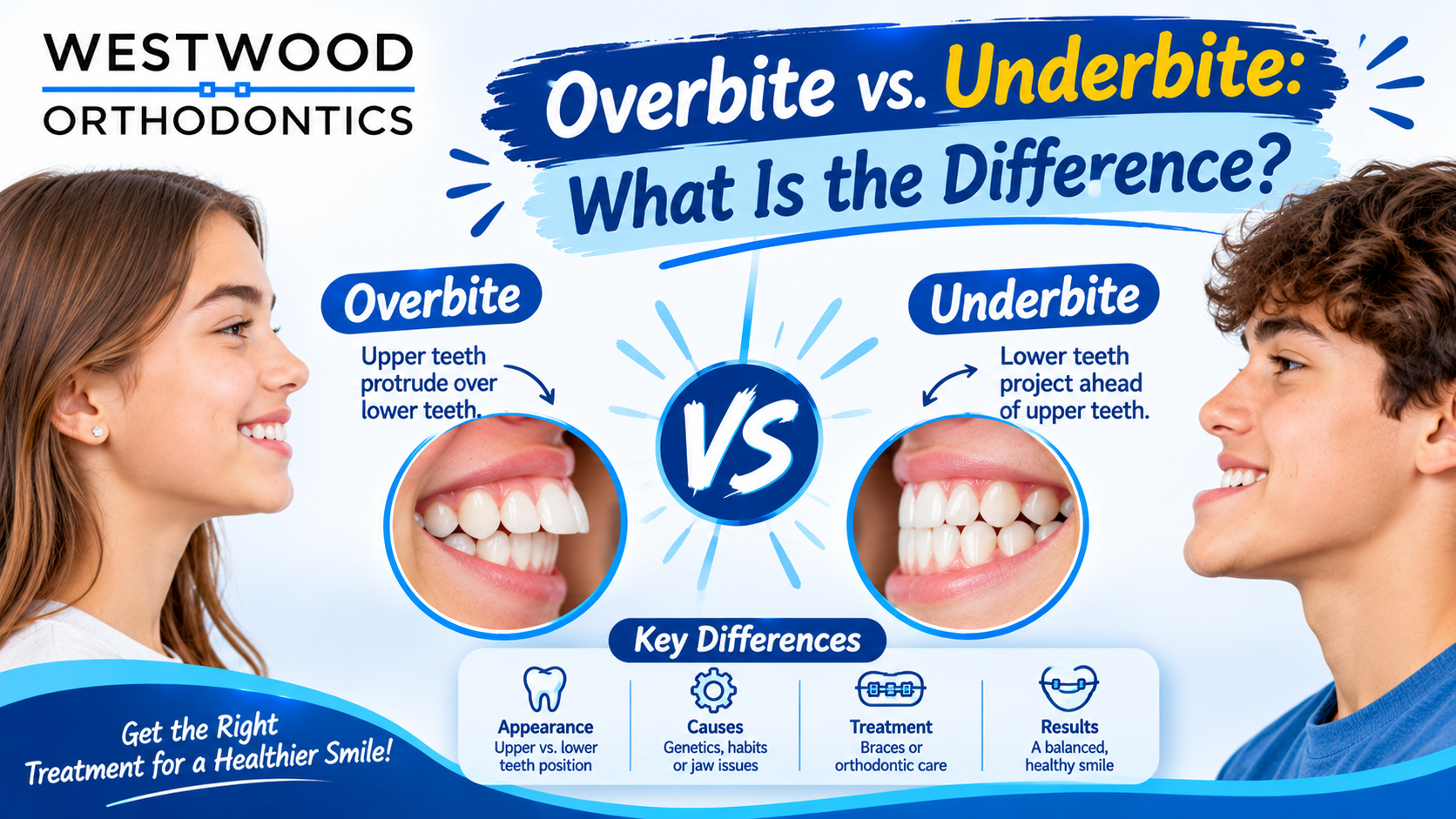
An overbite occurs when the upper front teeth cover too much of the lower front teeth. An underbite occurs when the lower front teeth and jaw sit in front of the upper teeth. Orthodontists can treat both, but the right treatment depends on the cause and the condition. These two problems sound similar, but many people get confused.
This guide explains what overbites and underbites are and what causes them. You will also learn how to spot a bite problem and how it can affect chewing. We also explain treatment options for adults and children, so you know what to expect at your first visit.
What Is an Overbite?
An overbite is when the upper front teeth overlap the lower front teeth too much. A slight overlap is normal. However, a deep overlap can irritate your gums and wear down your enamel.
The American Association of Orthodontists describes a deep bite as a condition where the upper teeth completely cover the lower teeth. Many orthodontists consider 2 to 3 millimeters of overlap normal. If the overlap is 4 millimeters or more, it is usually known as a deep overbite. Orthodontists often link an overbite to a Class II bite. This is when the lower jaw sits behind the upper jaw.
What Is an Underbite?
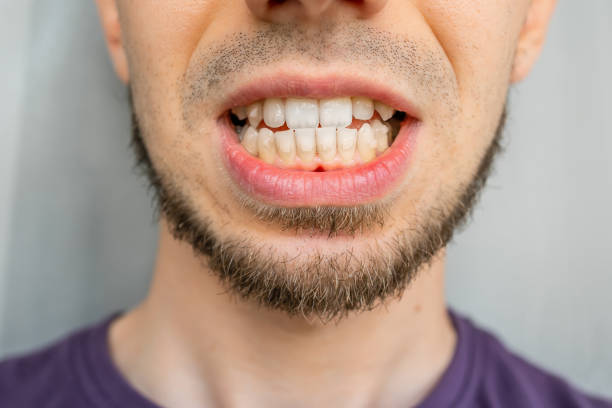
An underbite happens when the lower jaw and front teeth sit ahead of the upper teeth. This causes the lower teeth to close in front of the upper teeth. It affects about 5-10% of people worldwide. This makes an underbite less common than an overbite.
The AAO gives this estimate. It also explains that an underbite can be dental, skeletal, or a combination of both. An underbite is often known as a Class III bite. You may notice it more easily when looking at the face from the side. People with an underbite may have a more visible chin. From the side, their lower jaw may also appear to stick out. The table shows the main differences between the two problems.
What Causes Overbites and Underbites?
Overbites and underbites often run in families. They can also develop because of differences in jaw size and growth, and childhood habits. Usually, these bite problems have multiple causes. That is why an orthodontic exam is important.
Jaw shape and bite patterns can run in families. If a parent or sibling has a similar bite, it may be a helpful clue. The AAO explains that an underbite can develop if the upper jaw grows too slowly or the lower jaw grows too much. Some common causes include:
- You may inherit your jaw size or bite pattern from your parents.
- Your lower jaw may be smaller or larger than usual due to differences in growth.
- Habits like thumb sucking, using a pacifier for too long, or pushing the tongue against the teeth as a child.
- Losing teeth can shift your bite over time.
How Can You Tell If You Have a Bite Problem?
If your top and bottom teeth do not line up when you close your mouth, you may have a bite problem. You may also experience jaw pain, trouble chewing, or worn-down teeth. An exam is the only way to determine which type you have.
Look in the mirror as you gently bite down, and take a clear photo if you can. If your upper teeth cover most of your lower teeth, you might have an overbite. If your lower teeth are in front of your upper teeth, you may have an underbite. These are some other signs you should look for:
- Teeth that look flat, worn down, or chipped.
- Jaw pain or clicking, especially around the joint.
- Changes in speech, such as a lisp.
- A chin or lower jaw that looks too far forward or pushed back.
Can an Overbite or Underbite Affect Chewing?
An overbite or underbite can make chewing difficult because the teeth don’t line up properly. This can make it harder to bite and chew food. It also puts extra pressure on your jaw.
The AAO warns that misaligned teeth can wear down or chip over time. This can make it harder to eat and speak properly. An improper bite can also cause problems with the jaw joint. Some people don’t notice symptoms right away and may get used to them. Even so, a poor bite can cause bigger problems over time, like cracked teeth and sore jaw muscles.
How Do Orthodontists Treat an Overbite?
Orthodontists use braces or clear aligners to move teeth and treat an overbite. They may also help children with their jaw growth. Adults who have serious overbites because of their jaw position may need jaw surgery.
Braces or clear aligners can usually treat mild to moderate overbites. However, rubber bands may be used to help adjust the bite. A retainer keeps the teeth in their new positions. Your orthodontist first checks whether the problem is with your teeth or your jaw. This helps to guide the treatment plan. Treatment time varies from case to case.
How Do Orthodontists Treat an Underbite?

Orthodontists treat an underbite with braces, clear aligners, or growth appliances. The best option depends on whether the problem is with the teeth or the jaw. When growth is complete, serious underbites caused by jaw position usually require surgery.
Your treatment depends on your age and the reason for your underbite. Your orthodontist may also use a combination of methods. The three treatment options listed below can help with both overbites and underbites.
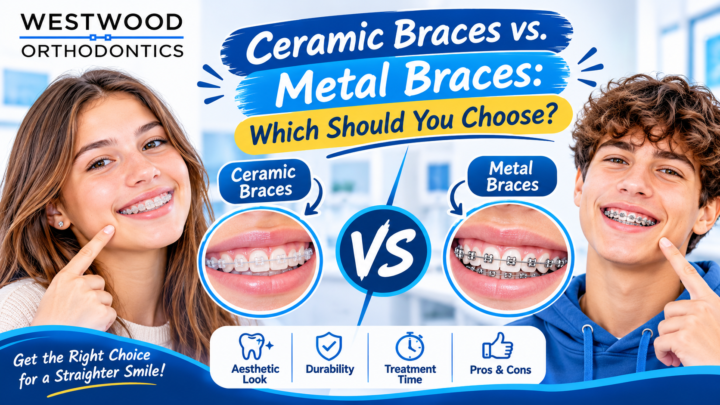
Traditional Braces
Braces use steady pressure to move teeth into the right positions. The AAO explains that braces can help when an underbite is mainly caused by tooth position. They may also use elastics to help guide the bite.
Clear Aligners for Suitable Cases
They can help treat mild to moderate dental problems. The AAO says they suit mild underbites that are largely dental. If the jaw is the main issue, aligners alone may not be enough.
Early Orthodontic Treatment for Children
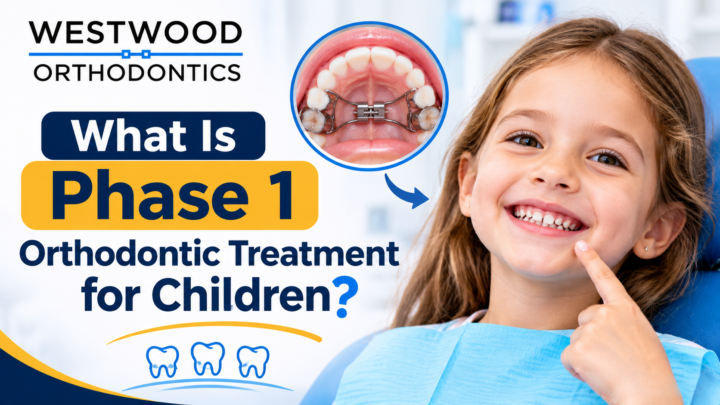
Children have more treatment options while their jaws are still growing. If you treat early, it may also make things easier later. A palatal expander and reverse-pull headgear help guide the upper jaw forward as it grows. Adults with severe jaw problems may require jaw surgery along with braces.
When Should You See an Orthodontist?
You should see an orthodontist as soon as you notice a bite problem. Children should have their first orthodontic checkup by age 7. Early visits can provide more treatment options, but adults can get treatment at any age. The AAO recommends a first orthodontic checkup by age 7. Early treatment can help avoid more serious problems later.
Frequently Asked Questions
Is an Overbite More Common Than an Underbite?
Overbites are usually more common. This is because underbites affect an estimated 5 to 10 percent of people worldwide.
Can Braces Correct an Underbite?
Braces can treat underbites that are caused by tooth position. Skeletal underbites may require extra appliances or surgery.
Can Invisalign Fix an Overbite?
Invisalign can treat many mild-to-moderate overbites. Deeper or skeletal overbites usually require braces or other treatments.
Should Children Be Evaluated for Bite Problems?
Children should have an orthodontic checkup by age 7, while their jaws are still growing. At this age, more treatment options may be available.
Final Thoughts
An overbite and underbite can affect chewing, speech, and tooth wear. You can treat both with braces, aligners, growth appliances, or surgery. So if you get checked early, it provides you with more treatment options. Westwood Orthodontics can help you understand your bite and choose the best treatment option. Schedule your consultation with Westwood Orthodontics today.
Westwood Orthodontics
A Smile Can Change Everything
Braces & Invisalign for kids, teens & adults in Los Angeles, CA. Board certified orthodontists — schedule your free consultation today!
Schedule Free Consultation