
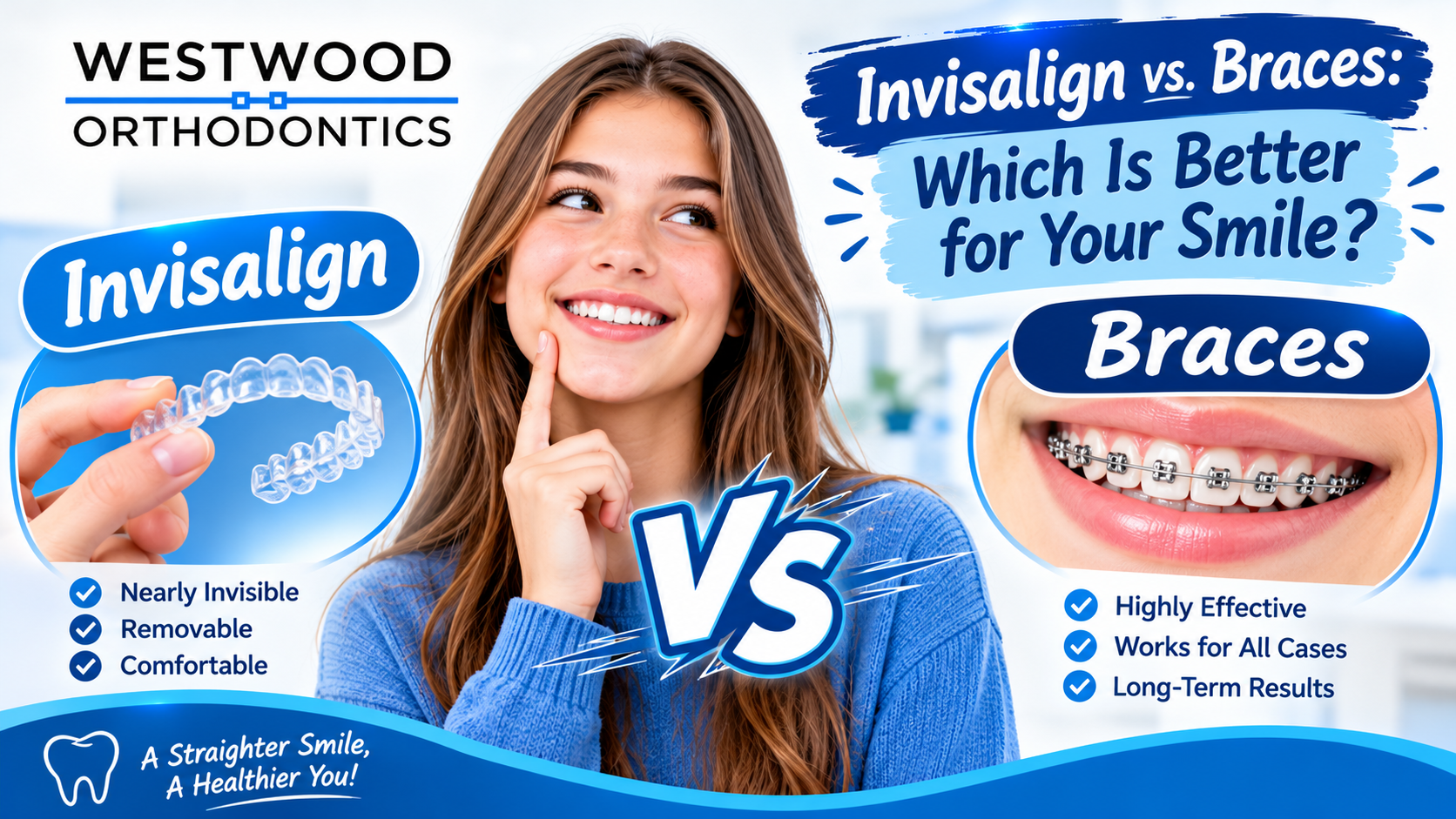
No two smiles are ever the same, so neither Invisalign nor braces will work for everyone. Braces are typically stronger for more complex bite issues or crowding. And Invisalign is generally a better choice if you have mild to moderate crowding and want something removable and discreet. The right choice depends on your teeth and habits.
Still, choosing between the two can be confusing, especially with so much marketing, and many people believe one beats the other. Here, we will discuss the differences between them, how they handle crowding and biting, and how they compare in comfort and cleaning. At the end, you will have an understanding of the questions to ask when visiting and what to find on each path.
What Is the Difference Between Invisalign and Braces?
The biggest difference is that Invisalign uses removable clear plastic trays, while braces use brackets and wires attached to the teeth day and night. Both move teeth slowly, but they feel and fit very differently in daily life.
Feature | Invisalign | Traditional Braces |
| How it works | Removable, custom-made clear trays | Fixed brackets joined by wires |
| Appearance | Nearly invisible | More noticeable; ceramic blends in |
| Comfort | Smooth plastic, less irritation | Soreness after adjustments |
| Eating | Remove trays, eat normally | Avoid sticky and hard foods |
| Daily effort | Wear 20 to 22 hours a day | Works 24/7, no removal |
| Best for | Mild to moderate crowding, small gaps | Complex cases, severe crowding, bite changes |
How Does Invisalign Work?
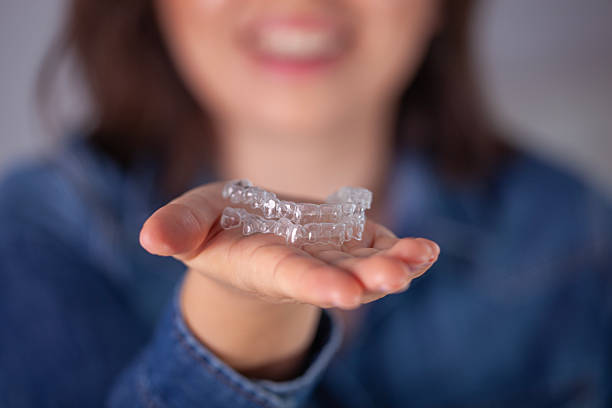
Invisalign uses a series of custom-made, transparent plastic trays that gradually move your teeth a little at a time. A new tray is used every 1-2 weeks, and each tray will move teeth a little further.
Your orthodontist uses scans or impressions before treatment begins and outlines the treatment steps, which you can view from the start. As the trays are removed, it is up to you to have a successful outcome. Most people should wear them 20-22 hours a day; otherwise, progress slows down. According to Invisalign, adult treatment typically takes 12 to 18 months and can be finished faster than braces. But if you leave a tray in a case instead of in your mouth, it won’t move your teeth, so consistency is key.
How Do Traditional Braces Work?
Traditional braces bond small brackets to your teeth and connect them with a wire that applies constant pressure, gradually moving them into their new positions. Your orthodontist will adjust the wire at every visit.
Once fixed, braces work 24/7, even if you don’t remember to wear them. Available in metal or ceramic, modern brackets are smaller and more comfortable than older ones. You also go to the office regularly for adjustments, allowing your orthodontist to closely monitor your progress. According to the same Invisalign page, braces can treat many dental issues and take 12 to 36 months.
Which Treatment Is Better for Crowded Teeth?
If crowding is mild to moderate, Invisalign is a good option, while braces are often preferred for severe crowding. The amount of space available determines which option will fit. With mild crowding, aligners can shift teeth into place comfortably, and small gaps often close during treatment. If teeth are crowded, they need more movement (larger or more controlled movements), and fixed braces give your orthodontist more control. If space needs to be created for tooth movement, your orthodontist may recommend extractions. Your orthodontist will tell you if your case needs extractions.
Which Option Can Correct Bite Problems?
Braces are the more reliable choice for severe bite issues such as deep overbites, underbites and crossbites, while Invisalign is suitable for milder cases. The harder the bite, the more control you will need.
The evidence supports some caution. In a review of 4 studies and 270 patients, a National Elf Service summary showed little evidence on clear aligners, while one of the studies of 48 patients found that patients who were treated with Invisalign did not have the same outcomes for malocclusion as those treated with conventional braces. That is, aligners suit many cases but not all. The same review also found shorter treatment times and fewer visits in mild to moderate cases, which aligns with what many orthodontists observe in practice.
Is Invisalign More Comfortable Than Braces?
Compared to braces, Invisalign is more comfortable because it is made of smooth plastic and won’t irritate your cheeks and gums. Both options can still cause some pressure when you start or switch trays. Braces can cause temporary soreness, especially after adjustments, and brackets may irritate your lips. Over-the-counter pain relievers ease the first few days; soft foods and orthodontic wax help. Invisalign users suffer pressure as well, typically for one day or two between each set of trays. Most people will adapt in 1 week or 2 anyway.
How Do Invisalign and Braces Compare for Oral Hygiene?
Invisalign lets you remove the trays for normal brushing, flossing, and cleaning. The trays are also easier to clean than braces, which require special attention around brackets and wires. Either will need good hygiene.
While there is no hard rule, the Invisalign page says that you can eat the majority of foods with aligners; with braces, you can’t eat crunchy or sticky foods like gummy candy or popcorn. Plaque builds up faster with overcrowded or covered teeth; the little things add up. The following are the primary habits for each:
With Invisalign, brush your teeth before you put the trays in, and clean the trays daily. With braces, brush after meals, angle your brush around each brace, and use floss threaders or interdental brushes.
How Do You Choose Between Invisalign and Braces?

Choose the one that fits your bite, lifestyle, and ability to stick to the plan. Invisalign works best for disciplined patients with mild crowding or spacing issues, while braces suit more complex bites or anyone who knows they might forget to wear aligners.
To figure out what fits you, ask yourself these questions before your visit:
- How complex is my bite, and can aligners actually fix it??
- Can I wear trays 20 to 22 hours per day without fail?
- How much does a discreet look matter to me?
Once you have answers to these questions, an exam will give you a clear recommendation. In a single visit, you can compare costs, treatment time, and goals. You will not have any pressure to decide right then, and you can ask as many questions as you want. At Westwood Orthodontics, we walk you through both options step by step. Book an appointment to find out which option fits you best.
FAQs
Is Invisalign as Effective as Braces?
For mild to moderate cases, Invisalign works really well. For more complex movements, braces still have stronger evidence. Only your orthodontist can select the right option for you after an exam.
Can Invisalign Fix an Overbite?
Invisalign deals with many mild overbites. Deeper overbites can be fixed with braces or other appliances.
Which Treatment Works Faster?
For adults, Invisalign is often faster, usually 12 to 18 months, compared with 12 to 36 months for braces. Your exact timeline is still based on your case.
Can Adults Choose Traditional Braces?
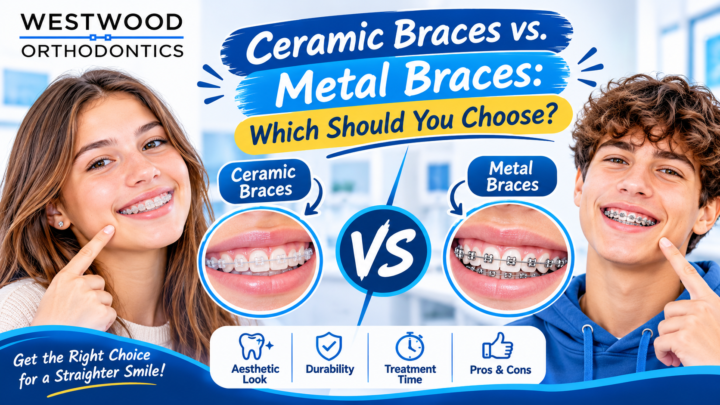
Sure. Adults can pick traditional braces at any age. Many adults choose ceramic brackets for a less noticeable look, and they work the same way as metal braces in most cases.
Final Thoughts
Braces work, and so does Invisalign – neither is right for everyone. If you have a milder case, you may opt for an Invisalign treatment, which is both removable and simple to take care of. If you have a more complicated case, you need braces for more complete control. Let your bite, daily habits, and goals guide your decision. A personal exam is an extra step to help with clarity.
Westwood Orthodontics can help you compare your options and choose with confidence. Schedule a consultation with Westwood Orthodontics today.

Westwood Orthodontics
A Smile Can Change Everything
Braces & Invisalign for kids, teens & adults in Los Angeles, CA. Board certified orthodontists — schedule your free consultation today!
Schedule Free Consultation