
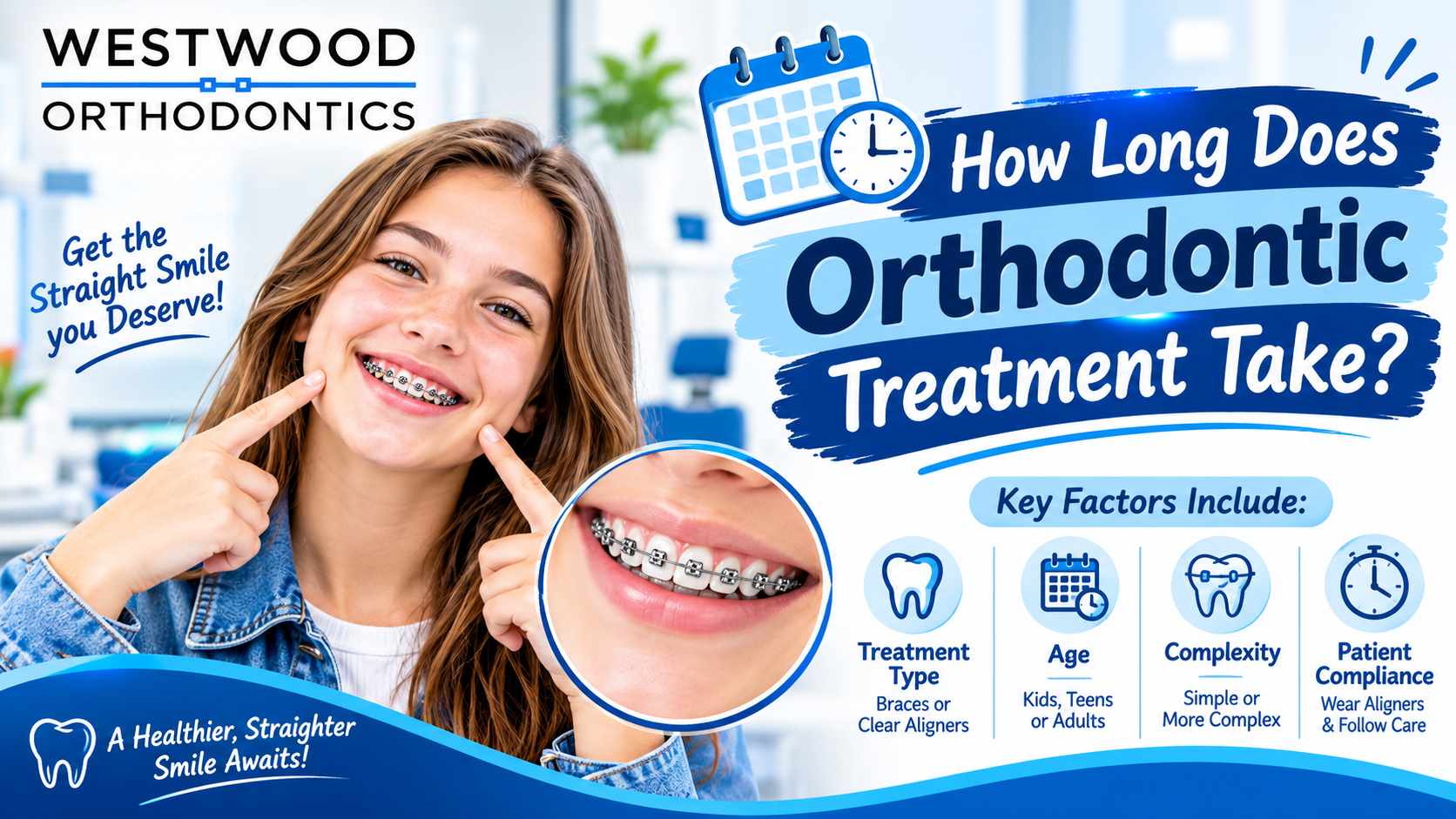
The exact orthodontic treatment timeline depends on your teeth, your bite, and the treatment you are receiving. But most patients complete orthodontic treatment in 12 to 24 months. However, mild cases may finish in 6 months, and complex cases may take more than 3 years.
Naturally, most people want a clear number before they start. That’s a fair question, since treatment affects school, work, and social plans. In this guide, we will discuss the average time for braces and Invisalign, factors that speed up or slow down treatment, and what happens if your teeth don’t shift. This way, you can make informed decisions and set realistic expectations to avoid surprises in your planning.
How Long Does Braces Treatment Usually Take?
The average timeline for braces treatment is about 18 to 24 months, and it can take longer for complicated cases, up to 36 months. The amount of tooth movement needed and the complexity of your bite determine the range. Braces are on 24 hours a day, so they work even during a hectic week.
According to Invisalign, braces take anywhere from 12 to 36 months, depending on the case. Mild cases, those with minor crowding or small gaps, are often completed in 6–12 months, the shortest time period most will see, while moderate cases take 12–24 months. Major jaw differences or significant crowding may require 24-36 months or more. Please remember that these ranges are estimates only and can be further refined after your orthodontist examines you. The following table shows the average treatment duration for each type.
How Long Does Invisalign Treatment Take?
Treatment with Invisalign typically lasts 6 to 18 months in mild to moderate cases. Invisalign treatment for adults takes about 12 to 18 months and is finished quicker than braces. However, results depend on wearing the aligners for approximately 20-22 hours each day. No wear time means slower progress and possibly additional trays. Cases can also be more complex when other instruments are used, such as elastics or small attachments on the teeth, which can lengthen treatment. Invisalign is removable, so it is flexible, but it also gives you control over the pace.
What Factors Affect Orthodontic Treatment Time?
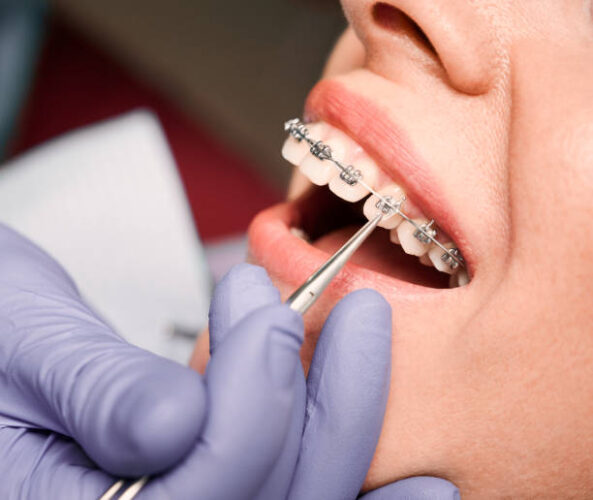
Treatment time depends mainly on tooth crowding, bite complexity, the type of treatment, and your compliance with instructions. All of these can add or subtract months, so two people with the same type of braces may finish treatment in different amounts of time.
The Severity of Tooth Crowding
Mild crowding needs small movements, so treatment takes less time. Severe crowding requires teeth to move farther, and sometimes you need to make room first. As a result, crowded smiles take longer. Mild crowding or small gaps can be completed within a year or less.
Bite Problems and Jaw Alignment
Many patients are surprised that a bite fixing takes longer than straightening teeth. In overbites, underbites, and crossbites, the problem may be the jaw, which complicates the plan because bone changes more slowly than teeth. For major jaw differences, 24 to 36 months or more are enough
The Type of Orthodontic Treatment
Aligners and braces move teeth at different speeds. A National Elf Service summary of a review reporting results from 4 studies and 270 patients found that braces took longer, but the difference wasn’t clear-cut. In mild to moderate cases, aligners can shorten treatment time and require fewer visits, but the evidence doesn’t show they work quickly in all situations.
Following Your Orthodontist’s Instructions
Your habits are more important than you think, and they’re the part of the timeline you shape. If you have broken brackets or gum inflammation, you will need more visits, but wearing them regularly keeps everything running smoothly. These steps help to ensure that treatment is on schedule:
- Aligners will be worn for 20-22 hours a day, or elastics as directed.
- Brush and floss daily, and don’t let gum inflammation get in the way of treatment.
- Avoid hard or sticky foods, which can break brackets and increase repair visits.
Can Missed Appointments Delay Treatment?
Missed appointments mean that treatment will be delayed as teeth continue to move in the correct direction. Most patients visit every 4-8 weeks, and missing visits slows progress. Teeth may not move or may go off track if a new set of aligners or a wire change is late. Repeated delays can add months by the end, and rescheduling will keep the delay small. If you miss a visit, it is not a big deal, but if it becomes a habit, it is. When your schedule is hectic, tell the office in advance so you can schedule a time that works for you. Many practices offer flexible hours, and a quick call is always better than no call.
Does Age Affect How Long Treatment Takes?
Treatment time also depends on age and may be shorter for children and teens as their jawbones are still developing. Treatments may take a little longer with denser adult bone. But adults can enjoy some fantastic results. Once the teeth are healthy, they can move at any age, and adults tend to be regular with their wear time and appointments, allowing treatment to stay on track. Teens, on the other hand, can move quickly but may also struggle to wear them, which parents can help with reminders.
What Happens If Teeth Do Not Move as Expected?
If teeth don’t move as expected, your orthodontist will look into why and adjust the plan. Slow movement is common, and it can usually be corrected without starting over. Don’t worry if progress seems slow, because every mouth responds differently. Your orthodontist might take new scans or X-rays to see what is going on. Depending on what they find, your plan may change in one of these ways:
- Adding elastics or other small appliances to move certain teeth.
- Ordering refinement aligners or adjusting your wires.
- Reviewing wear time, brushing habits, and appointments with you to identify what can be improved.
Once active treatment is done, you will also take a retainer. You will wear it full-time at first, then only at night, so your teeth don’t shift back. That retention phase is part of the full timeline, so it is good to plan for it from the start.
FAQs
Can Braces Straighten Teeth in Six Months?
Only for very mild cases. Most people need 12 months or more, and moderate cases are usually closer to 18-24 months.
Does Invisalign Take Longer Than Braces?
For mild to moderate cases, Invisalign often takes less time. Complex cases can take as long as braces, or even longer.
How Often Are Orthodontic Appointments Needed?
Most patients come in every 4 to 8 weeks, depending on the treatment type and the plan your orthodontist sets.
Can You Speed Up Tooth Movement Safely?
You can help a lot by following instructions, wearing your aligners and elastics exactly as instructed, and keeping your appointments. Avoid any shortcuts your orthodontist hasn’t approved. Moving teeth too fast can damage roots and gums. Your orthodontist can tell you what options are really safe for you.
Final Thoughts
Most orthodontic treatment takes 12 to 24 months. Mild cases can finish sooner; complex ones can take longer. Your tooth crowding, bite, treatment type, age, and daily habits all affect the timeline, and wearing your retainer maintains your results afterwards. Being consistent is the best way to finish on time, and a personal exam can give you an exact estimate. Westwood Orthodontics can map out a realistic timeline for your smile. Schedule a consultation with Westwood Orthodontics today.

Westwood Orthodontics
A Smile Can Change Everything
Braces & Invisalign for kids, teens & adults in Los Angeles, CA. Board certified orthodontists — schedule your free consultation today!
Schedule Free Consultation