
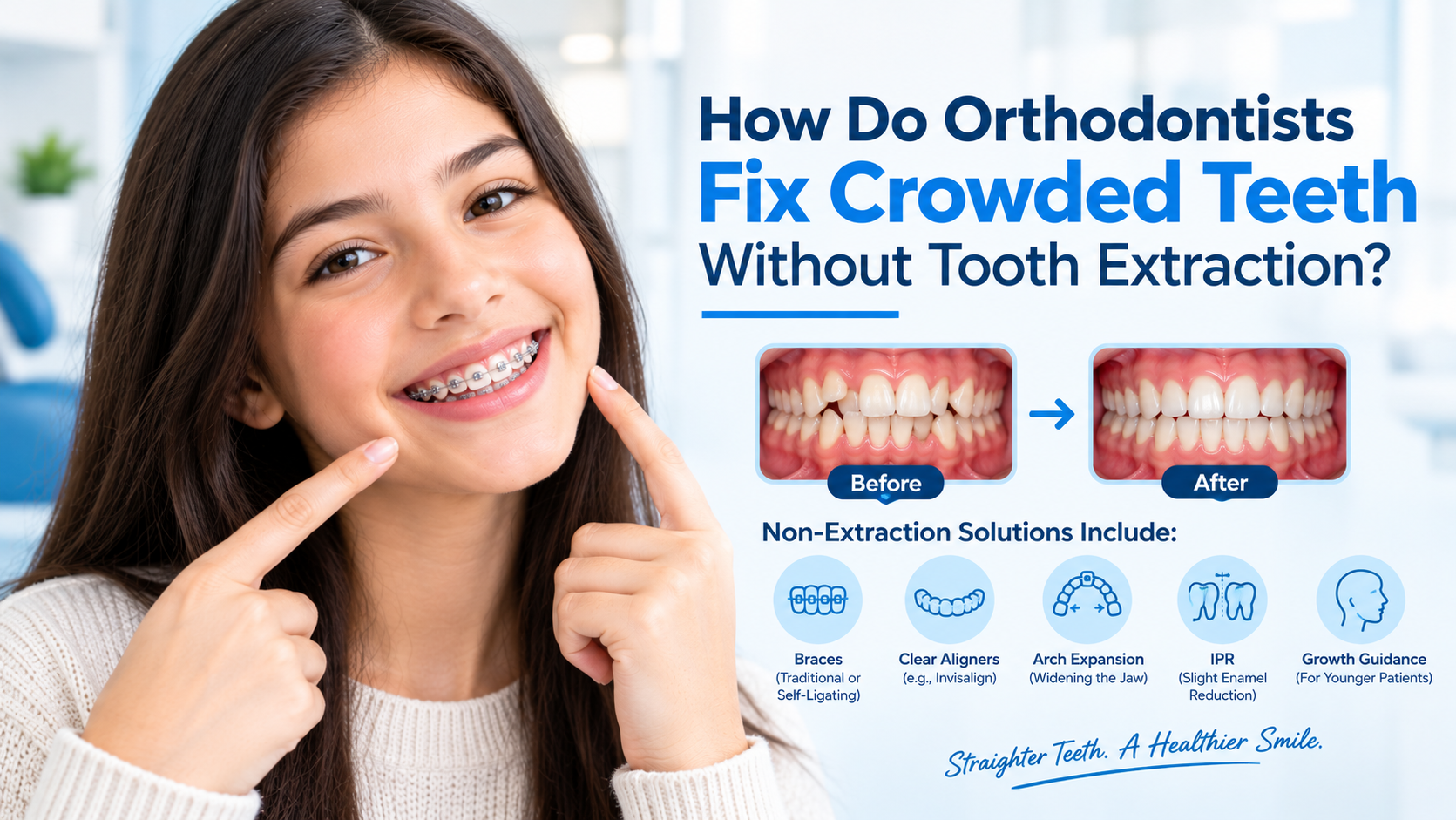
Orthodontists fix crowded teeth without extraction by creating space through several methods. They include arch expansion, interproximal reduction, and molar distalization, rather than pulling teeth to make space. These techniques gently expand the dental arch. They shave tiny amounts of enamel between teeth. They can also shift back molars to open up space at the front of the mouth.
Braces and clear aligners like Invisalign use the same approach to guide teeth into better alignment. These techniques usually work well for mild crowding. That is why many dentists try these techniques before tooth removal. This guide walks through why teeth crowd in the first place and the specific techniques orthodontists use to fix it without extractions.
Why Do Teeth Become Crowded in the First Place?
Teeth crowding happens when your jaw doesn’t have enough space to fit every tooth in proper alignment. It forces teeth to twist, overlap or come in at odd angles. This mismatch between tooth size and jaw size can be inherited. However, childhood habits such as thumb sucking or early tooth loss can also cause it.
Can Braces Straighten Crowded Teeth Without Removing Teeth?
Yes, braces can straighten crowded teeth without removing teeth, but they work best for mild to moderate cases. Brackets and wires apply continuous force that helps correct alignment and widen the dental arch. They create enough space for teeth to settle into the correct place.
What Is Interproximal Reduction (IPR), and How Does It Create Space?
Interproximal reduction, often called IPR. It creates space by removing a tiny, painless layer of enamel. This layer is usually between 0.1 and 0.5 millimeters thick and is removed from the sides of certain teeth. These small adjustments add up to enough room for crowded teeth to shift into better alignment without extraction.
How Does Palatal Expansion Fix Crowded Teeth?
It creates space for crowded teeth by gradually widening the upper jaw; dentists can use fixed or removable devices. It increases overall arch width and gives your teeth more space to align correctly. But this technique works well only in children and young teens whose jawbones are still growing. Growing bones respond well to gentle pressure.
Can Invisalign Fix Crowded Teeth Without Extractions?
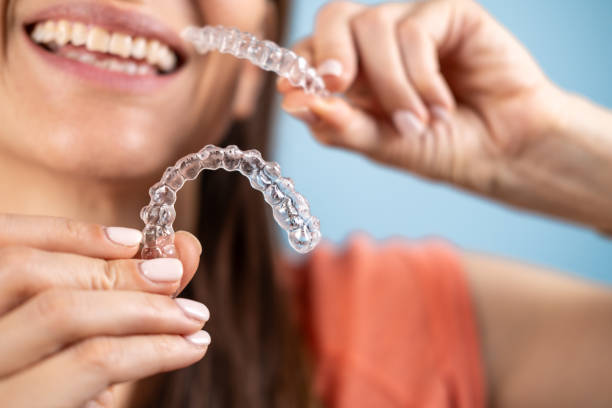
Yes, Invisalign works well for crowded teeth without extractions in mild to moderate cases. It uses a series of custom clear aligner trays that slowly and gradually shift teeth into their original position. According to Invisalign’s clinical guidance, aligner therapy suits mild and moderate crowding. For more serious crowding, you may need additional techniques or a different approach.
How Does Tooth Movement Create Space in a Crowded Smile?
Tooth movement creates space in a crowded smile by gradually repositioning teeth. For example, it may tilt front teeth slightly outward or shift back molars further into the jaw. It can open up room without removing any teeth. Orthodontists often combine several of these movement strategies at once to maximize the space gained.
When Is Tooth Extraction Still Necessary for Severe Crowding?
Tooth extraction isn’t always necessary for severe crowding. Sometimes dentists use additional techniques, combined with the above, without extraction. However, tooth extraction is only needed when the gap is too large for expansion or enamel reduction. Extraction becomes essential when crowding is about 8 to 10 millimeters in a single arch. In these cases, non-extraction methods cannot work. Usually, dentists choose non-extraction approaches for about 80 percent of cases. Roughly, you can say one out of every five cases may need tooth extraction.
Frequently Asked Questions
Can crowded teeth be straightened without removing teeth?
Yes, but it depends on how severe your crowding is. If you have mild to moderate crowding, dentists may prefer tooth-straightening approaches that don’t require removing teeth. But for severe crowding, you may need additional techniques or a different approach.
How do braces create space for crowded teeth?
Braces create room for crowded teeth by widening the dental arch. They help your teeth move into proper alignment. However, they may be combined with techniques such as interproximal reduction to create additional space.
Can Invisalign fix severe tooth crowding without extraction?
Invisalign is best for mild or moderate crowding. Severe crowding may require tooth extraction or additional treatment along with aligner therapy. Only your orthodontist can confirm whether you need Invisalign or tooth extraction.
Is palatal expansion painful for children?
Palatal expansion usually causes mild pressure or discomfort, not sharp pain. Widening happens gradually over weeks, not all at once. Most children adjust to the sensation within the first few days of starting treatment.
Does interproximal reduction damage your teeth?
Interproximal reduction removes only a small, carefully measured layer of enamel. When a trained professional does it correctly, it does not damage the tooth’s structure or increase the risk of cavities. The amount removed is far less than what naturally wears away over a lifetime of chewing.
When is tooth extraction necessary for crowded teeth?
Extraction becomes necessary when crowding is too severe for expansion, enamel reduction, or tooth movement. Extraction helps create enough room on its own, which usually applies to larger space deficits. An orthodontist will typically try non-extraction methods first before recommending extraction.
Final Thoughts
Crowded teeth do not always require tooth extraction. Techniques such as arch expansion, interproximal reduction, and molar distalization can help. These techniques work well for mild to moderate cases where you do not need to remove a single tooth. However, if crowding is severe, it may require extraction. Only your doctor can confirm whether you need extraction or additional techniques, such as aligners. Westwood Orthodontics can evaluate your specific crowding and recommend the most conservative approach to get your smile where it needs to be.

Westwood Orthodontics

A Smile Can Change Everything
Braces & Invisalign for kids, teens & adults in Los Angeles, CA. Board certified orthodontists — schedule your free consultation today!
Schedule Free Consultation