
There is no best age for braces; however, orthodontists recommend a first evaluation for kids by age 7. For full braces, your child should be between 11 and 14, when most permanent teeth have come in, and jaw growth is still active. Some children with serious problems need early treatment even before their teen years. However, others need to wait until most adult teeth have come in.
Adults can also get braces for mild to moderate cases at any age. But it takes longer than kids’ treatment. This guide explains when your child should first see the dentist and why age matters. It also covers the factors that determine the right time to start braces for kids, teens, and adults.
A child should have a first evaluation by age 7, even if their teeth look fine. Orthodontists recommend this early checkup because bite and jaw issues can be easily detected at this stage. The best part is that treatment is also simple, because there are no permanent teeth yet and the jawbone responds well.
This first visit isn’t about getting braces right away. Usually, this visit isn’t for treatment; it is just to check how the jaw and teeth are developing. During this visit, the orthodontist determines whether anything needs attention.
Age 7 matters because enough permanent teeth have come in and the jaw structure has developed. So, orthodontists can more easily spot hidden issues such as severe crowding, crossbites, or other bite problems. Catching problems earlier gives orthodontists more flexibility to choose the best option and guide growth correctly.
If you wait past age 7, you may miss the best chance to catch problems that can be fixed faster and at a lower cost. But that doesn’t mean every 7-year-old needs treatment. It simply means a professional has had the chance to look and plan if needed.
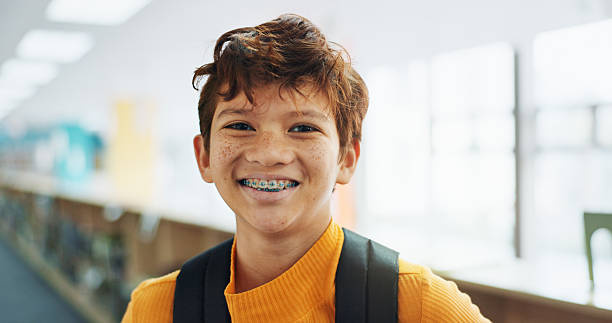
For most children, the best age to get full braces is between 11 and 14. By then, most permanent teeth have come in, and jaw growth is still active enough to guide tooth movement efficiently. This stage is sometimes called Phase 2 treatment. This follows any earlier Phase 1 interceptive work a child may have needed.
A smaller group of children benefit from earlier treatment, sometimes called Phase 1, between ages 7 and 10. This usually involves an expander or partial braces that guide jaw development rather than align every tooth. It is usually followed by full braces once more permanent teeth have erupted.
These years are common for braces because of adolescent growth spurts. It allows dentists to align teeth by guiding jaw development. During this time, most permanent teeth have already come in. Your dentist can evaluate your bite more clearly.
During this age, treatment brings faster results than later. You can see the expected results sooner than if you wait until jaw growth slows. That is why ages 11 to 14 are recommended as the best time for comprehensive treatment.
Yes, adults can get braces at any age. Healthy teeth and gums respond well, no matter the age. Many adults who didn’t consider braces in their teens can start treatment later. They have many options, such as clear aligners like Invisalign.
However, remember that braces can take longer to work than for teenagers. This is because the jawbone responds more slowly than a growing bone. But age alone is not a barrier. Many adult patients completed treatment successfully into their 30s, 40s, and beyond.
Many factors influence when to start braces. Key factors include how many permanent teeth have erupted and how severe crowding or bite issues are. Jaw growth also matters because it plays a major role during treatment. A child’s overall dental health, how they care for braces, and the condition of the issue also matter for choosing the right time. That is why two children of the same age can have different treatment timelines.
No, you are never too late, no matter your age. Age alone isn’t everything; it depends on many other factors. Undoubtedly, the jawbone responds more slowly as you age, but if your gums and jaw are healthy, you can still get braces. Orthodontists treat patients well into their 30s and 40s, and even beyond. For older patients, gum health, bone density, and existing dental conditions matter. But only your dentist can determine whether treatment makes sense at your age.
You can get braces at any age because age is only one factor. For faster results, ages 11 to 14 are best because you have the most permanent teeth, and your jawbone is still growing.
Yes, an evaluation at age 7 can catch hidden bite or jaw issues early. Consider it even if the teeth appear straight on the surface.
A 10-year-old may benefit from early interceptive treatment, like an expander or partial braces. However, full braces are more common closer to early adolescence.
No, 14 is still within the common window for full braces. Many teens start treatment around this age with excellent results.
Yes, adults can get braces well after age 30. If you have healthy teeth and gums, you generally respond well to treatment at any age.
Starting earlier helps in some cases, but the right timing depends on each child’s specific bite and growth pattern.
No single age is best for everyone. It depends on many factors, and age is only one. You usually schedule your child’s first dental visit around age 7 to catch any issues early. But the best time to get braces is between ages 11 and 14. That doesn’t mean it’s the only age window for braces. You can also get braces later, even in your 30s and 40s. It depends on your jawbone and teeth health. If your gums and jaw are healthy, you can get braces in your 40s and beyond. Age is one factor; your dental health, bite issues, and crowding also matter when deciding when to get braces.
Westwood Orthodontics can evaluate your child’s teeth, or your own. They help determine the right time to start treatment based on your specific needs. Schedule a consultation today to find the timing that makes the most sense for your smile.
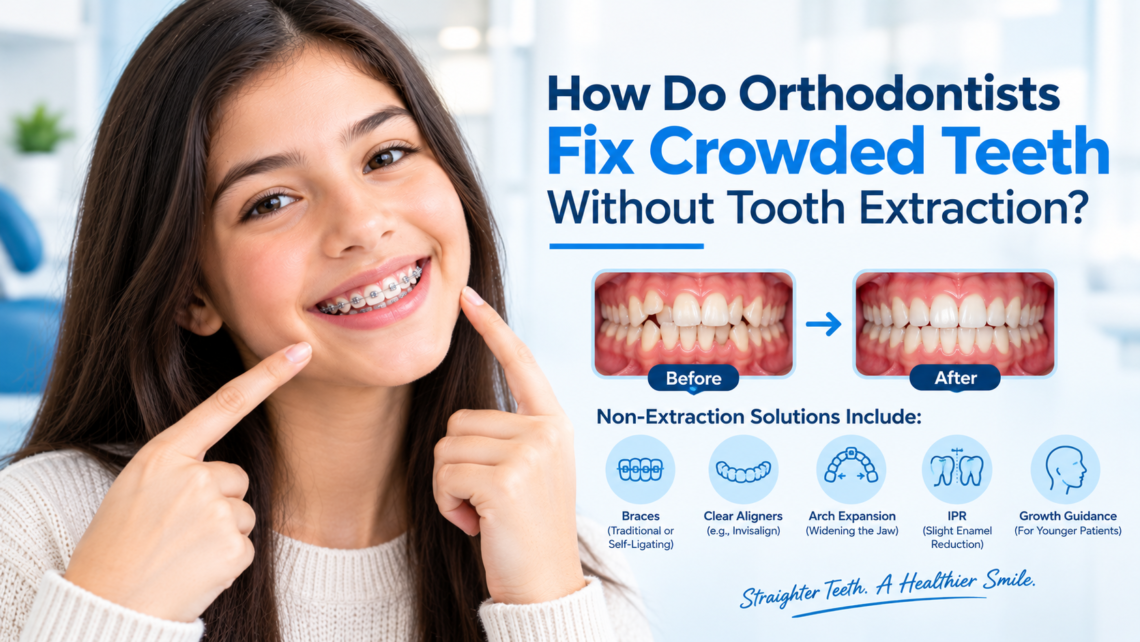
Orthodontists fix crowded teeth without extraction by creating space through several methods. They include arch expansion, interproximal reduction, and molar distalization, rather than pulling teeth to make space. These techniques gently expand the dental arch. They shave tiny amounts of enamel between teeth. They can also shift back molars to open up space at the front of the mouth.
Braces and clear aligners like Invisalign use the same approach to guide teeth into better alignment. These techniques usually work well for mild crowding. That is why many dentists try these techniques before tooth removal. This guide walks through why teeth crowd in the first place and the specific techniques orthodontists use to fix it without extractions.
Teeth crowding happens when your jaw doesn’t have enough space to fit every tooth in proper alignment. It forces teeth to twist, overlap or come in at odd angles. This mismatch between tooth size and jaw size can be inherited. However, childhood habits such as thumb sucking or early tooth loss can also cause it.
Yes, braces can straighten crowded teeth without removing teeth, but they work best for mild to moderate cases. Brackets and wires apply continuous force that helps correct alignment and widen the dental arch. They create enough space for teeth to settle into the correct place.
Interproximal reduction, often called IPR. It creates space by removing a tiny, painless layer of enamel. This layer is usually between 0.1 and 0.5 millimeters thick and is removed from the sides of certain teeth. These small adjustments add up to enough room for crowded teeth to shift into better alignment without extraction.
It creates space for crowded teeth by gradually widening the upper jaw; dentists can use fixed or removable devices. It increases overall arch width and gives your teeth more space to align correctly. But this technique works well only in children and young teens whose jawbones are still growing. Growing bones respond well to gentle pressure.
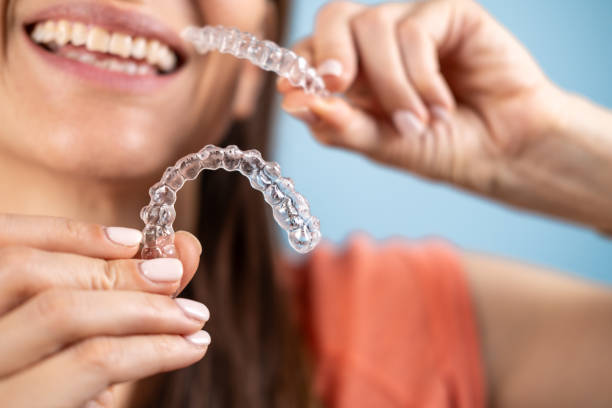
Yes, Invisalign works well for crowded teeth without extractions in mild to moderate cases. It uses a series of custom clear aligner trays that slowly and gradually shift teeth into their original position. According to Invisalign’s clinical guidance, aligner therapy suits mild and moderate crowding. For more serious crowding, you may need additional techniques or a different approach.
Tooth movement creates space in a crowded smile by gradually repositioning teeth. For example, it may tilt front teeth slightly outward or shift back molars further into the jaw. It can open up room without removing any teeth. Orthodontists often combine several of these movement strategies at once to maximize the space gained.
Tooth extraction isn’t always necessary for severe crowding. Sometimes dentists use additional techniques, combined with the above, without extraction. However, tooth extraction is only needed when the gap is too large for expansion or enamel reduction. Extraction becomes essential when crowding is about 8 to 10 millimeters in a single arch. In these cases, non-extraction methods cannot work. Usually, dentists choose non-extraction approaches for about 80 percent of cases. Roughly, you can say one out of every five cases may need tooth extraction.
Yes, but it depends on how severe your crowding is. If you have mild to moderate crowding, dentists may prefer tooth-straightening approaches that don’t require removing teeth. But for severe crowding, you may need additional techniques or a different approach.
Braces create room for crowded teeth by widening the dental arch. They help your teeth move into proper alignment. However, they may be combined with techniques such as interproximal reduction to create additional space.
Invisalign is best for mild or moderate crowding. Severe crowding may require tooth extraction or additional treatment along with aligner therapy. Only your orthodontist can confirm whether you need Invisalign or tooth extraction.
Palatal expansion usually causes mild pressure or discomfort, not sharp pain. Widening happens gradually over weeks, not all at once. Most children adjust to the sensation within the first few days of starting treatment.
Interproximal reduction removes only a small, carefully measured layer of enamel. When a trained professional does it correctly, it does not damage the tooth’s structure or increase the risk of cavities. The amount removed is far less than what naturally wears away over a lifetime of chewing.
Extraction becomes necessary when crowding is too severe for expansion, enamel reduction, or tooth movement. Extraction helps create enough room on its own, which usually applies to larger space deficits. An orthodontist will typically try non-extraction methods first before recommending extraction.
Crowded teeth do not always require tooth extraction. Techniques such as arch expansion, interproximal reduction, and molar distalization can help. These techniques work well for mild to moderate cases where you do not need to remove a single tooth. However, if crowding is severe, it may require extraction. Only your doctor can confirm whether you need extraction or additional techniques, such as aligners. Westwood Orthodontics can evaluate your specific crowding and recommend the most conservative approach to get your smile where it needs to be.
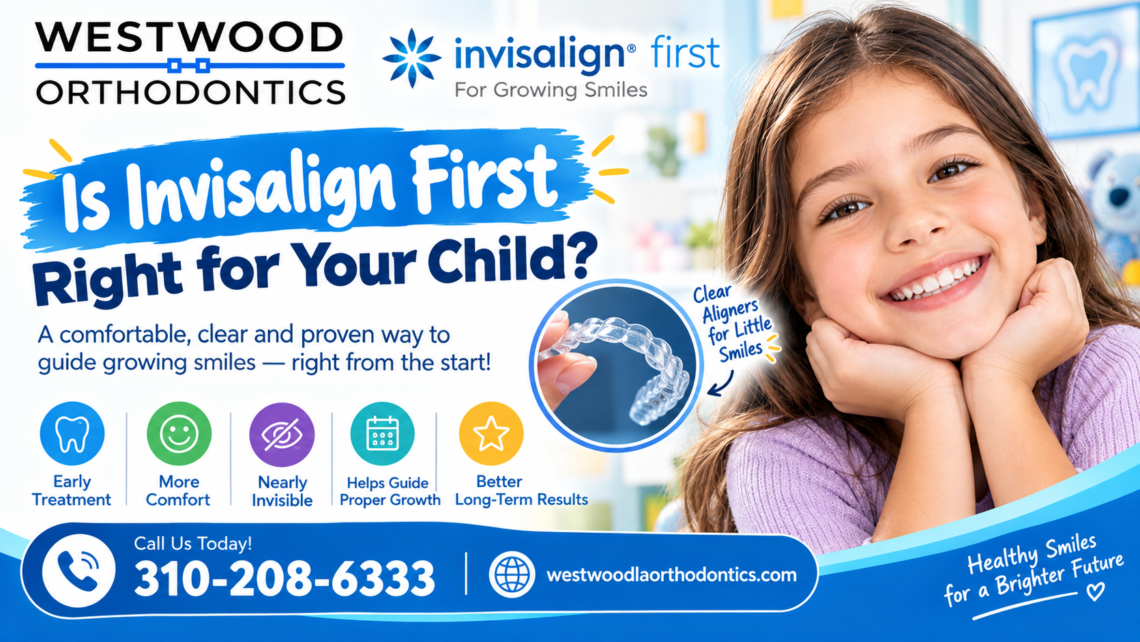
Invisalign First is best for several children ages 6 to 10 who need early Phase 1 treatment to guide jaw growth and create space for permanent teeth. This clear aligner system works well for crowding, spacing, and narrow arches, and kids often like that it is removable and more comfortable than traditional brackets and wires. The tradeoff is that success depends on a child actually wearing the aligners 20 to 22 hours a day and being responsible enough to keep track of them. Complex bite or skeletal problems may still require traditional appliances instead.
Invisalign First is the best choice for your child if they are between 6 and 10 years old and still have a mix of baby teeth and permanent teeth. It helps with jaw growth, crowding, spacing, or a narrow dental arch, rather than a serious skeletal issue.
This clear aligner system was built specifically for early orthodontic treatment. It gives families a removable option to traditional Phase 1 orthodontics that still helps growing jaws and makes room for incoming adult teeth. Whether it is truly the best option depends on your child’s unique dental development and how responsible they are likely to be with a removable appliance.
In this article, we’ll walk through how Westwood Orthodontics explains Invisalign First. We’ll also cover what it treats and how to tell whether your child is a good candidate.
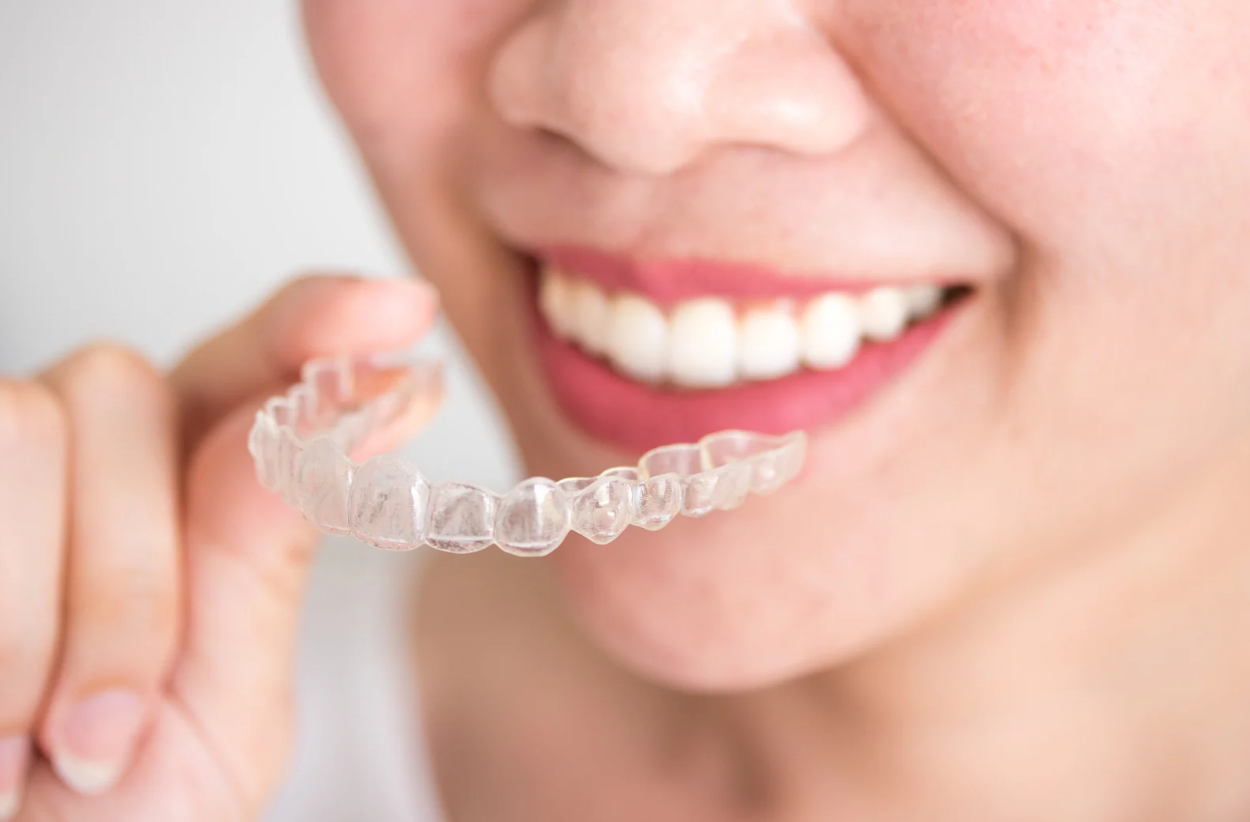
Invisalign First is a clear aligner system. It was created specifically for children in the mixed dentition stage. This is when baby teeth and permanent teeth are both present in the mouth at the same time. According to Invisalign’s official site, Invisalign First aligners are specially designed for kids ages 6 to 10 and are built to fit smaller mouths. Teeth are still developing, and Invisalign treats a wide range of orthodontic problems as a child grows. Instead of waiting until every adult tooth has developed, this system works with a growing child’s natural development to help jaw growth and free up space for coming teeth.
The best age for Invisalign First is usually between 6 and 10 years old. This aligns closely with when most orthodontists recommend a first evaluation. According to the American Association of Orthodontists, children have their first orthodontic check-up no later than age 7.
Because enough permanent teeth have typically grown by then for an orthodontist to spot early signs of crowding, bite problems, or a narrow arch. But dental development is more important than chronological age. So your orthodontist considers your child’s development and tooth eruption before deciding.
Invisalign First can treat a broad range of early orthodontic problems. It can address crowded teeth, spacing issues, and narrow dental arches that need gentle widening to make room for incoming adult teeth.
According to Invisalign’s official page, the system is designed to treat teeth-straightening problems in growing children, from simple to complex. It specifically includes crowding, spacing, and narrow arches. Beyond straightening, Invisalign First can also help guide jaw growth and solve early bite problems such as crossbite, overbite, or underbite. These are often easier to correct while a child’s jaw is still growing than later.
The advantages of Invisalign First for children come mainly from the fact that the trays are removable and are composed of smooth plastic rather than fixed metal hardware. This changes the day-to-day experience of treatment quite a bit for a growing child.
Kids may require Invisalign First aligners to eat and to brush and floss normally. This makes it much simpler to keep both the teeth and the aligners clean during treatment. This is the biggest benefit as compared to fixed appliances, where food can become stuck around brackets and wires no matter how carefully a child brushes.
Without metal brackets or wires, nothing can damage or irritate the inside of the cheeks and lips. This makes the day-to-day experience more comfortable for younger kids. Additionally, smooth plastic trays mean less soreness right after a new set is introduced rather than after a fresh wire adjustment.
No metal hardware to break or come loose. Many families typically experience fewer urgent trips back to the orthodontist to fix a poking wire or a popped bracket. A missing or cracked aligner is often a simple fix compared to an emergency bracket repair.
Invisalign First and traditional Phase 1 braces can both effectively solve early orthodontic concerns. The best option typically comes down to your child’s personality and your family’s confidence in their ability to follow the daily wear schedule.
Traditional braces do the work automatically without requiring daily discipline from your child. This may reassure parents who aren’t confident their child will keep up with removable aligners. Conversely, Invisalign First gives kids more freedom during meals, sports, and school activities, but requires regular follow-through at home.
Invisalign First | Traditional Phase 1 Braces |
| Removable for eating and brushing | Fixed in place, no daily removal required |
| No metal to irritate cheeks or lips | Metal brackets and wires attached to teeth |
| Fewer emergency repair visits | Regular bracket or wire repairs |
| Need regular daily wear from the child | Works automatically without regular compliance |
Invisalign First is customized for children roughly ages 6 to 10 who still have a mix of baby teeth and permanent teeth.
These options may effectively treat crowding, spacing, and early bite problems, though outcomes with Invisalign First depend on regular daily wear.
Children want to wear Invisalign First aligners about 20 to 22 hours a day. They remove them only to eat and to brush and floss.
Invisalign First may solve early bite problems, including crossbite, overbite, or underbite, along with crowding and spacing issues.
Several children still require Phase 2 treatment later. Phase 1 options such as Invisalign First focus on jaw growth and space rather than final alignment.
Several dental insurance plans treat Invisalign First the same as traditional Phase 1 braces, though coverage still depends on your specific policy.
Invisalign First can be a great choice for children ages 6 to 10 who want early treatment for crowding, spacing, a narrow arch, or an early bite problem. As long as they can wear the aligners regularly. Traditional Phase 1 braces remain the better fit for children who want fixed, hands-off treatment or who have more complicated skeletal problems. An honest orthodontic consultation is the best way to determine which path fits your child’s specific case.
At Westwood Orthodontics, we assess each child’s dental development individually before recommending Invisalign First or another Phase 1 option. Book a consultation with us now to see whether Invisalign First is the best option for your child.
Article Summary
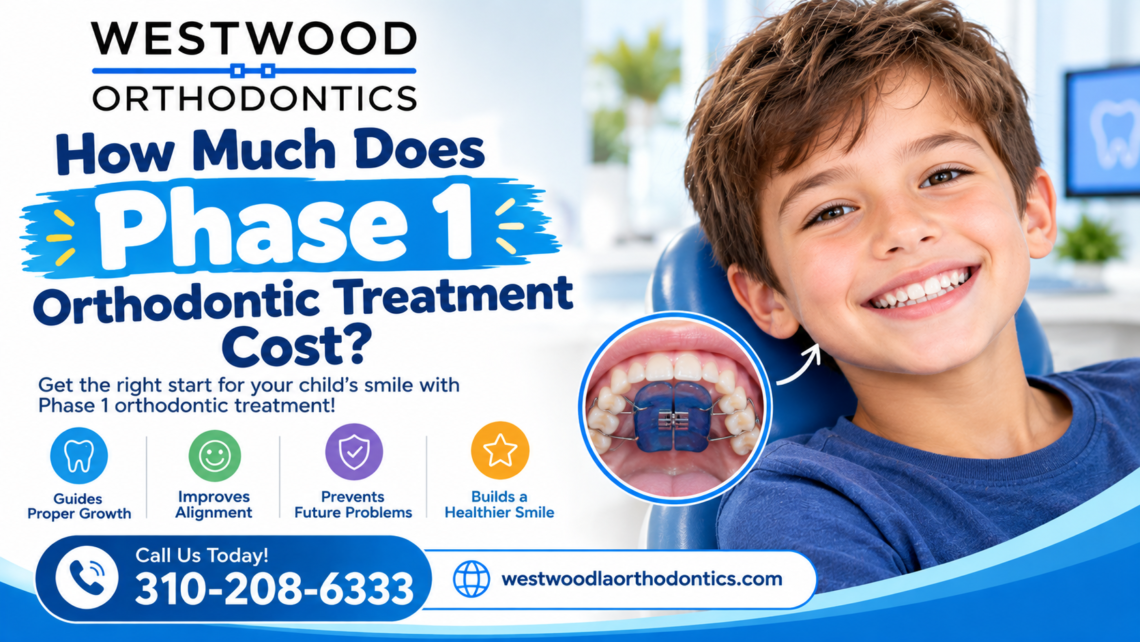
Phase 1 orthodontic treatment costs, on average, range from $2,000 to $4,500. The exact number depends on which appliances a child needs. A standalone appliance like a palatal expander often costs $500 to $1,500, while a combination of structural appliances and partial braces on average is in the $2,000 to $4,500 range, and early clear aligner programs can reach $3,000 to $5,000. Phase 1 rarely replaces the need for Phase 2 treatment later. But it can guide jaw growth, create space for permanent teeth, and sometimes prevent more invasive procedures later.
Phase 1 orthodontic treatment average costs are between $2,000 and $4,500. A child who only needs a standalone appliance may pay closer to $500 to $1,500, while early clear aligner programs can run $3,000 to $5,000. This early orthodontic treatment, also called interceptive orthodontics, focuses on guiding jaw growth and correcting foundational bite issues in children that have ages of about 6 to 10. It makes it less expensive than comprehensive, full-mouth braces later in the teen years.
The final number depends heavily on the specific orthodontic appliances your child needs and how complex their case turns out to be. Below, Westwood Orthodontics breaks down what drives Phase 1 pricing, how it compares to Phase 2 treatment later on, and what insurance and payment plans typically cover.
The average cost of Phase 1 orthodontic treatment is between $2,000 and $4,500 for most children. This range reflects that Phase 1 is intentionally more limited in scope than a full course of comprehensive treatment. Because early orthodontic intervention focuses on jaw growth and development rather than final cosmetic alignment.
Orthodontists can often achieve meaningful results with fewer appliances and a shorter treatment window than comprehensive teenage braces require. Most Phase 1 treatment plans run somewhere between 6 and 18 months. It also depends on what a child’s case calls for.
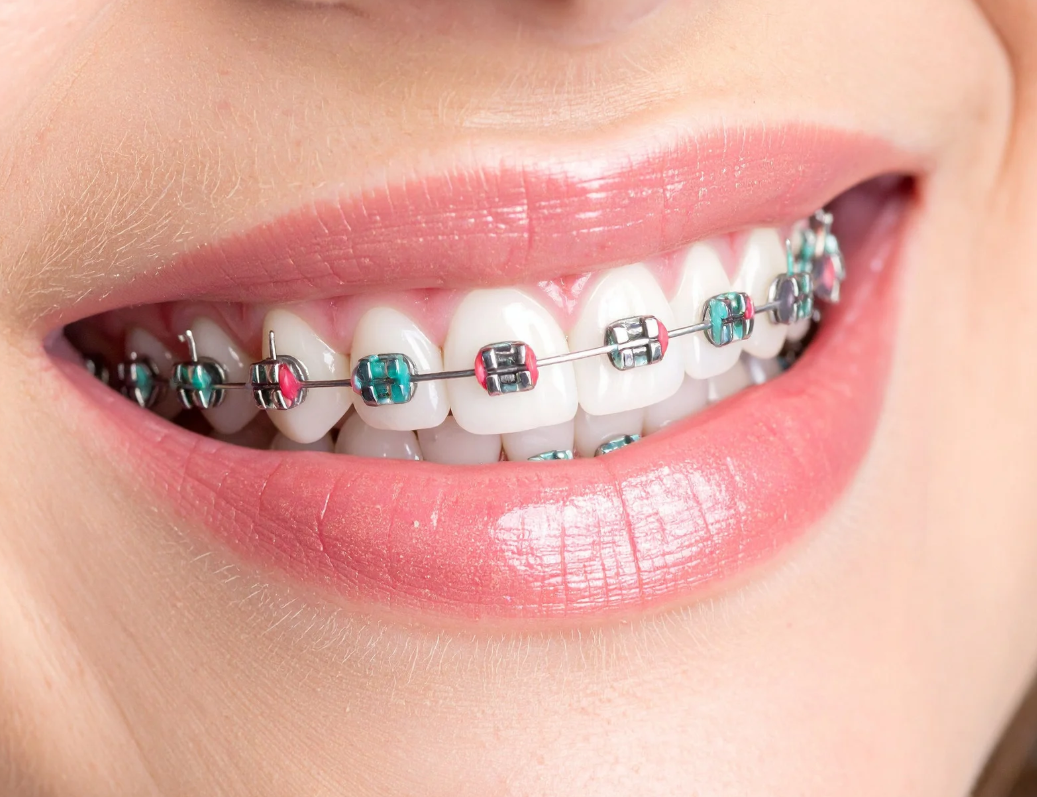
The cost of Phase 1 treatment depends mainly on which orthodontic appliances your child needs, since orthodontists customize every plan around the child’s specific developmental needs rather than using a one-size-fits-all approach.
If your child needs only a standalone foundational tool, such as a palatal expander to widen a narrow jaw or a habit appliance to stop thumb sucking, the cost is usually the lowest of the three main categories. It often ranges (on average) between $500 and $1,500. This option works well for children with a single, well-defined issue rather than multiple concerns.
This is the most common Phase 1 scenario, typically costing between $2,000 and $4,500, and it involves structural appliances combined with partial metal or clear braces on the front teeth to guide erupting adult teeth into a better position. Combining tools this way lets an orthodontist address both jaw development and early crowding and spacing in the same treatment window.
Programs specifically designed for Phase 1 early intervention, similar to Invisalign First, sit at the higher end of the pricing spectrum, often running $3,000 to $5,000. These programs use a removable aligner system built for a child’s mixed set of primary teeth and permanent teeth, which some families prefer over fixed appliances for younger kids.
Orthodontists recommend early treatment because certain jaw and bite problems are much easier to correct when a child’s bones are still growing, unlike after growth has finished. The American Association of Orthodontists recommends that children have their first orthodontic evaluation no later than age 7, since enough permanent teeth have usually erupted by then for a trained orthodontist to spot early signs of crowding, crossbite, or jaw growth concerns. This does not mean every child needs treatment at that age. It simply means catching potential issues early gives your orthodontist more options for guiding growth naturally.
According to the American Association of Orthodontists, the goal of early orthodontic treatment is to intercept a developing problem, eliminate the cause when possible, guide the growth of the jaw and facial bones, and create adequate space for permanent teeth as they come in. Crossbite treatment, overbite treatment, and underbite treatment are common reasons a child might need Phase 1 care, along with general crowding and spacing issues that would only get more complicated to fix as a child gets older.
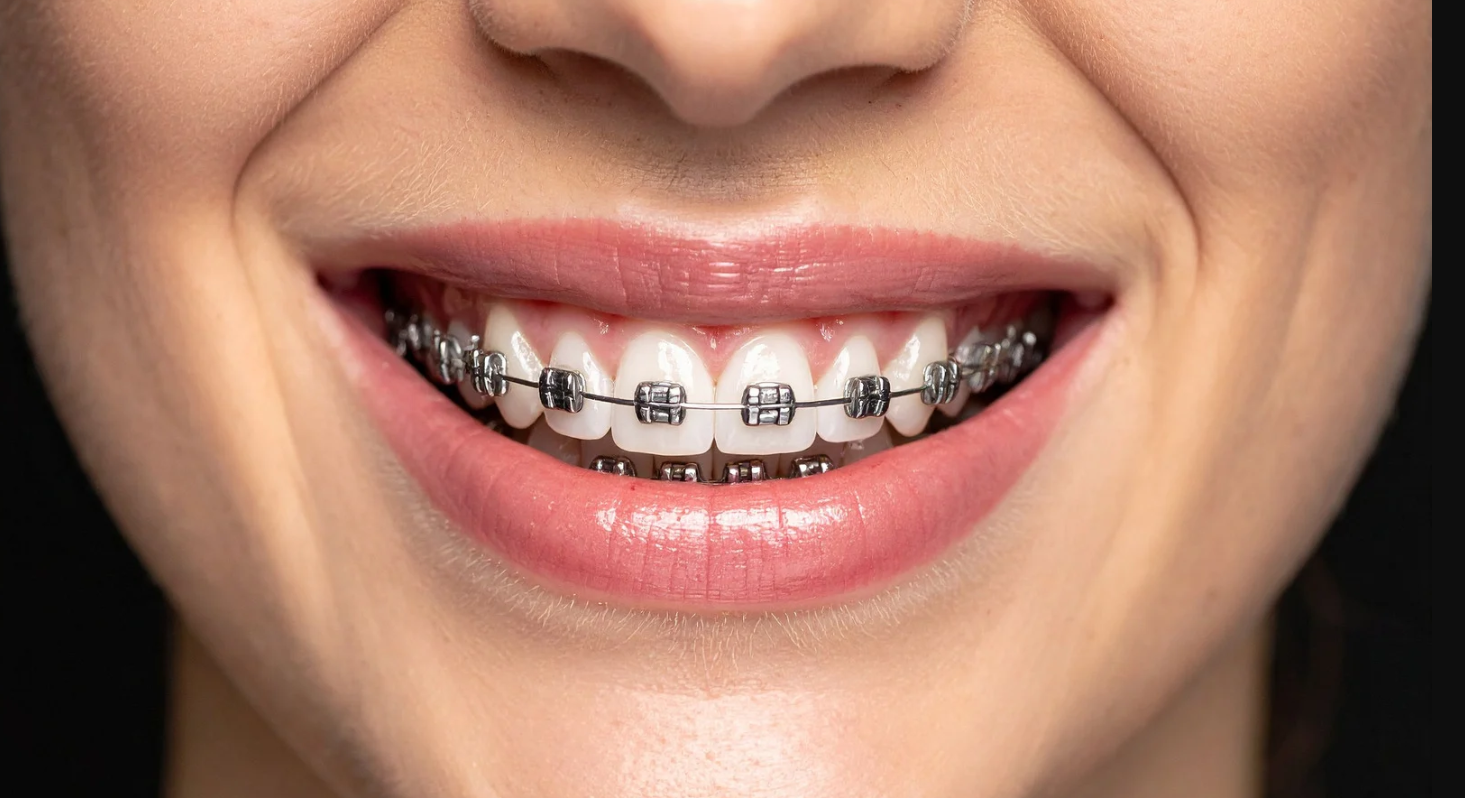
Phase 1 rarely eliminates the need for future orthodontics, and most children who complete early treatment will still need Phase 2 treatment, meaning full braces or aligners, during their early teenage years to finalize their bite and alignment.
Phase 1 averages $2,000 to $4,500, followed by a resting or observation period that is often included or billed at a minimal fee while the remaining permanent teeth erupt naturally. Then Phase 2 averages another $3,000 to $7,000 once every adult tooth is in place. Together, two-phase orthodontic treatment averages $5,000 to $9,500 across both stages.
Choosing a two-phase treatment plan usually costs about 25% more overall than waiting and completing a single round of comprehensive teenage braces instead. That said, Phase 1 can prevent the need for far more invasive procedures later, such as permanent tooth extractions or corrective jaw surgery, which is why many orthodontists still recommend it for children whose case shows a clear benefit from early intervention.
Application category | What’s Typically Involved | What Can Affect the Cost |
| Appliance-only | A palatal expander or habit- breaking appliance alone | Single, well-defined issue, shorter timeline |
| Braces plus appliances | Structural appliances with partial braces on front teeth | Combination of jaw guidance and early alignment |
| Early clear aligners | A removable aligner system built for mixed definition | Custom trays, provider fees, treatment length |
Dental insurance covers part of Phase 1 orthodontics if your plan includes orthodontic benefits. But the coverage may differ from what many parents expect. Most insurance plans with orthodontic coverage pay around 50% of the treatment cost up to a lifetime maximum, usually $ 1,000 to $3,000, and most importantly, this doesn’t reset between stages of treatment. That means using your benefit for Phase 1 will reduce what remains available when your child needs Phase 2 treatment a few years later, so it is worth planning both stages with that lifetime maximum in mind rather than treating each phase as a separate benefit.
Most orthodontists offer in-house, interest-free payment plans that split the Phase 1 treatment fee into manageable monthly payments over the typical 6-to-18-month treatment timeline. This makes the out-of-pocket cost far easier to absorb than paying the full amount upfront. Families can also use Flexible Spending Account or Health Savings Account funds to pay for Phase 1 treatment using pre-tax dollars, which effectively lowers the real cost by avoiding income tax on that portion of the payment.
The average cost of Phase 1 treatment is between $2,000 and $4,500, though appliance-only cases can cost less and early aligner programs can cost more.
Yes, most children need Phase 2 treatment after completing Phase 1 because Phase 1 covers jaw growth and space, not full cosmetic alignment.
The age division starts at 6 to 10, which is considered Phase 1, but during this phase children still have both primary and permanent teeth.
No, most plans apply both phases toward the same lifetime maximum, so using benefits for Phase 1 reduces what is left for Phase 2.
A standalone palatal expander or similar appliance usually costs (on average) between $500 and $1,500, depending on the complexity of the case.
For children with a clear early issue, Phase 1 can prevent more invasive treatment later, like extractions or jaw surgery, even though the total two-phase cost runs higher.
As you review the information above, Phase 1 orthodontic treatment average costs between $2,000–$4,500. But the exact cost depends on your child’s needs and whether you choose a standalone appliance, braces combined with appliances, or an early clear aligner program. On the other hand, children still need phase 2 treatment after that: early orthodontic intervention, which guides jaw growth, creates space for permanent teeth, and sometimes addresses more invasive procedures under the line.
You get clear guidance on insurance and how it works, payment plans, and a picture of the two-phase cost, all put together to help parents. Westwood Orthodontics offers an initial consultation to raise awareness of early treatment so your child can take advantage of the benefits. If you found the information helpful, schedule a consultation with Westwood Orthodontics today to get a clear plan and cost estimate for your child.
Article Summary
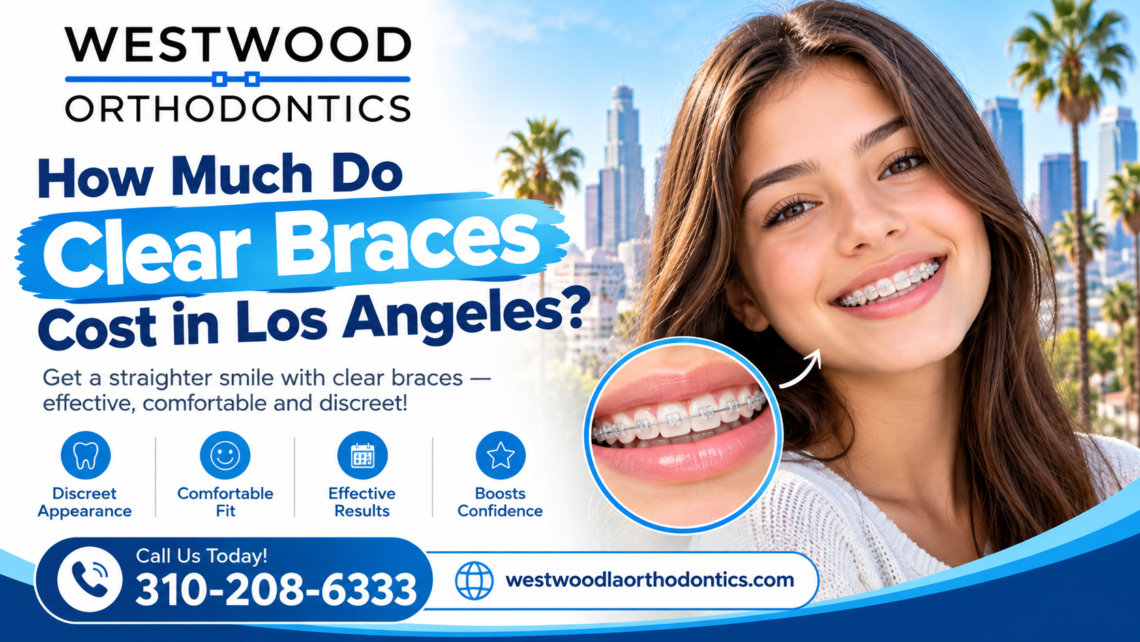
Clear braces cost, on average, in Los Angeles range from $4,000 to $8,500. The price depends on whether you choose fixed ceramic brackets or a removable clear aligner system. Los Angeles has a higher cost of living and more practice overhead than the rest of the country. Your final quote depends on case complexity, provider expertise, and even the neighborhood where your dental office is located. Patients with orthodontic coverage or dental insurance can cover up to $3,000 of the total cost. Most local practices provide flexible financing options with affordable monthly payments.
Clear braces cost in Los Angeles typically ranges between $4,000 and $8,500 for a full course of treatment. This depends on whether you go for fixed clear ceramic braces or a removable clear aligner system. The local pricing is a bit higher than the national average for orthodontic treatment costs. This is mostly because of the cost of living and commercial overhead in Southern California compared to most other regions.
Whether you are a teen looking for discreet braces or an adult who wants clear braces after years of wanting straighter teeth, your final price depends on your case, your provider, and the clinic you choose. Here, Westwood Orthodontics explains what affects the cost of clear braces in Los Angeles. It also explains how you can budget for treatment.
In Los Angeles, the average cost of clear braces is $4,000 to $8,500. The final price depends on the severity of the misalignment corrected and the type of clear system your orthodontist suggests. This category includes clear ceramic braces and also clear aligner trays. The price of the two options usually overlaps more than most people think. Los Angeles has a higher cost of living than most of the country. Because of this, clear braces treatment in Los Angeles is often more expensive than the national averages you may find online.
A milder condition with little spacing or crowding will likely fall on the lower end of that range. When you include all stages of treatment, a more involved case with significant crowding or bite correction might cost well over $8,500. Imagine your quote as a complete package that includes 18 to 24 months of dental care. This makes the cost easier to understand than viewing it as a single hardware fee.
A complete clear braces quote should include all stages of your treatment in one upfront package fee. This is better than billing you piece by piece as you go. Most orthodontic practices in the Los Angeles metro area use this price structure. This makes it much easier to plan for the entire course of care from start to finish.
Your quote should clearly include the first exam, digital 3D scans, and diagnostic X-rays used to develop your treatment plan. This should also include any physical clear brackets and wires, as well as the full set of custom aligner trays required for your case. It should also cover all your regular progress and adjustment visits during treatment. You will also receive your final set of post-treatment retainers to keep your teeth in place after your active treatment is completed.
Before you commit, always ask your dental office to confirm these details in writing. This is because two quotes that seem similar on paper may have very different levels of coverage.
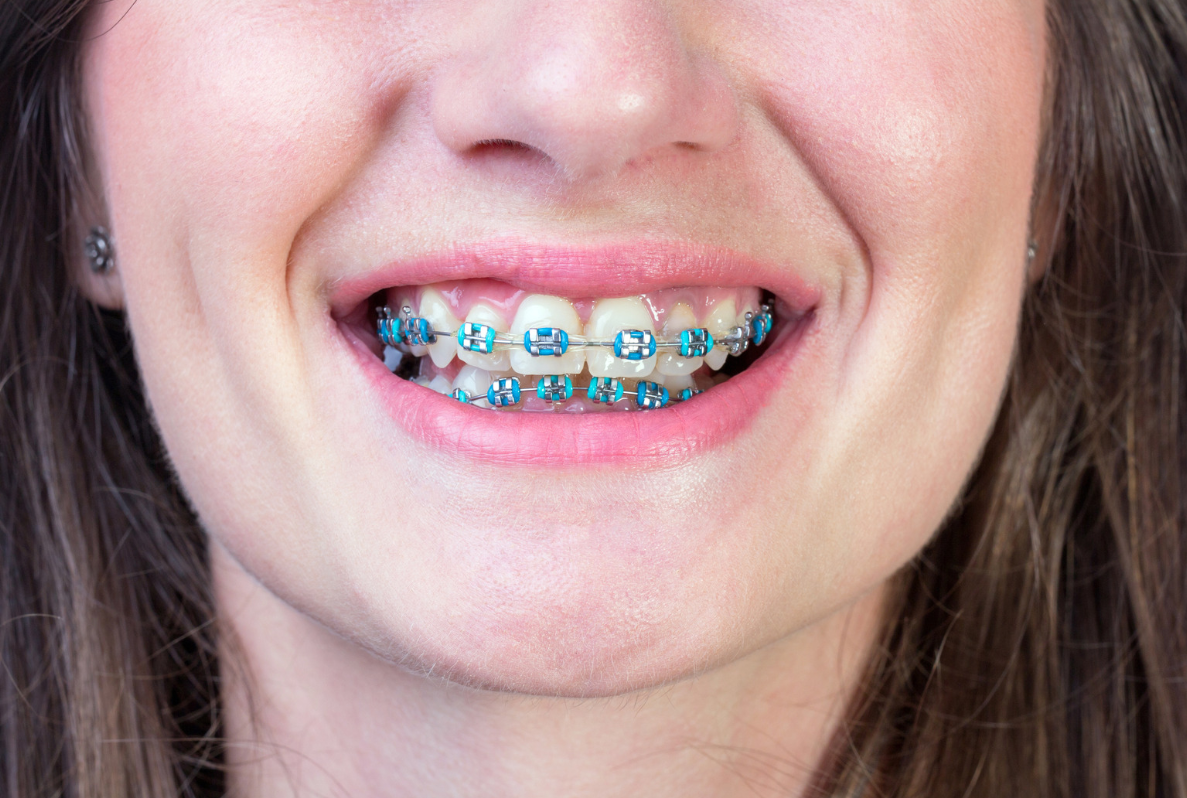
Your final braces cost is affected by many kinds of factors. Knowing each one makes it much easier to compare quotes from different providers in the city.
The cost of fixing minor crowding or simple spacing is usually at the lower end of the spectrum. However, severe bite misalignments or jaw corrections need more time, extra appliances, and a longer overall treatment duration. One of the most important factors in your final quote is the severity of teeth misalignment your orthodontist finds during your first visit.
A board-certified orthodontic specialist costs more upfront than a general dentist who also provides clear braces treatment. However, you are paying for years of focused, advanced training in tooth movement specifically. The American Association of Orthodontists says that orthodontists complete two to three years of specialized education after dental school. This is evident in the fees that many specialty practices charge.
In Los Angeles, overhead varies significantly by zip code. A boutique clinic in Beverly Hills or West LA will usually charge higher fees than a community practice in the Valley or East LA. Location shouldn’t be the only factor in your decision because both settings can deliver excellent results.
Most Los Angeles practices charge similar prices for clear ceramic braces and clear aligner trays. The exact number depends on your specific situation rather than the system itself.
Treatment Level | What’s typically involved | What can affect the cost |
| Mild | Minor spacing or slight crowding | Fewer trays or brackets, shorter timeline |
| Moderate | Noticeable crowding, moderate bite correction | Standard treatment duration, routine visits |
| Complex | Severe misalignment or jaw-related correction | Extended treatment duration, specialists involved |
If your dental insurance coverage provides orthodontic insurance benefits, it can significantly reduce your out-of-pocket costs for clear braces. However, it rarely covers the full cost of treatment. Many PPO plans include orthodontic insurance with a lifetime maximum of $1,000 to $3,000 toward the total. This can increase your out-of-pocket expenses to between $1,500 and $6,000, depending on your case and plan. Before agreeing to treatment, check your policy so that you know what your dental insurance will and will not cover.
Most Los Angeles clinics provide flexible financing options, helping you to split the total cost into affordable monthly orthodontic payments. You don’t have to pay the entire amount in advance. After an initial down payment, some local offices provide in-house payment plans with zero-interest financing. This makes treatment more affordable to families and adults on a monthly budget.
You can also use tax-free funds from a Flexible Spending Account or Health Savings Account to pay down your balance. This reduces your actual cost by avoiding income tax on that portion of your payment.
Most people spend between $4,000 and $8,500 for a full course of treatment. This depends on the case complexity and the clear system used.
The prices between the two are usually similar. This is because the final cost relies more on your specific case than on which clear system you use.
Orthodontic treatment in Southern California can be higher than the national average because of higher living costs and practice overhead.
Many PPO plans may cover $1,000 to $3,000 in orthodontic treatment over a lifetime. However, they rarely cover the entire expense.
Adult clear braces are very common. Many Los Angeles practices see just as many adult patients as teens who prefer clear options.
After a down payment, most local clinics provide in-house, zero-interest payment plans that split the total cost into affordable monthly payments.
Clear braces in Los Angeles usually cost from $4,000 to $8,500. Your total cost depends on your case, your orthodontist, and the location where you get treatment. Dental insurance coverage can help cover some of the overall cost. Whether you are considering treatment for yourself or your teen, flexible financing options can also help you manage monthly costs. You can fairly compare orthodontic treatment costs across different practices in the city if you know what a quote really includes, from diagnostic scans to final retainers.
For patients in Los Angeles, Westwood Orthodontics provides honest pricing and a straightforward consultation. Make an appointment with Westwood Orthodontics today to see how much your clear braces treatment might cost.
Article Summary
In Los Angeles, braces cost, on average, between $3,500 and $8,000 for a full treatment plan, and complex cases or special materials can sometimes cost $10,000 or more. Because commercial rent and living costs are higher all over Southern California, prices here are usually above the U.S. average reported by the American Dental Association. Your case complexity, treatment duration, and even where your orthodontic clinic is, all affect your final quote. Dental insurance can cover $1,000 to $3,000 of the total, and most local offices offer in-house financing with easy monthly payments.
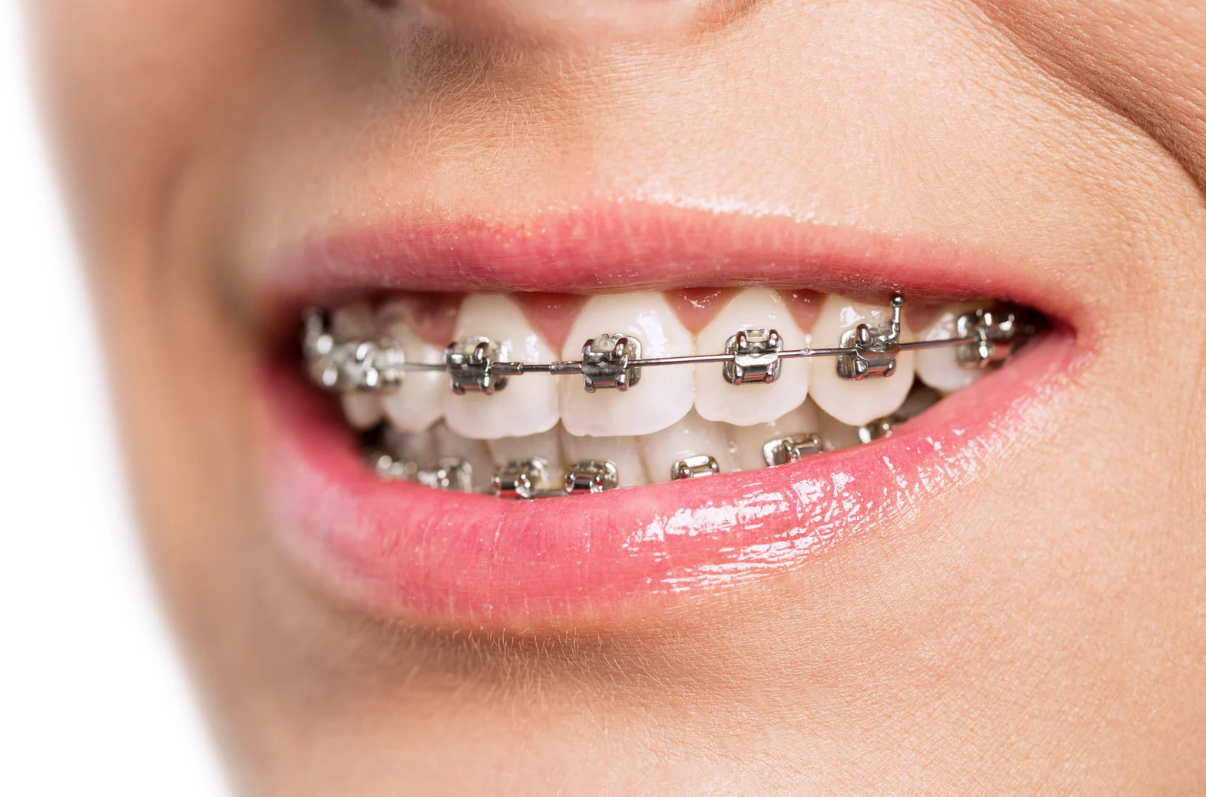
Braces cost in Los Angeles, on average, range from $3,500 to $8,000 for complete treatment. The price of highly complex cases such as jaw correction or special appliances is anywhere from $3,000 to $10,000 or more. Local prices are slightly above the national average because rent and living costs are higher across Southern California than in most other parts.
While you may be looking for traditional metal braces, ceramic braces, or Invisalign, your final price depends on your case, treatment duration, and the orthodontic clinic you choose. Below, Westwood Orthodontics explains what increases the cost of braces in Los Angeles, what insurance and financing plans cover, and how you can get an exact quote for your smile.
The average cost of braces in Los Angeles is about $3,500 to $8,000 for most patients. It depends on the type of braces and how complex your case is. According to the American Dental Association’s Survey of Dental Fees, the U.S. average for full orthodontic treatment is closer to $5,000 to $6,000. It means Los Angeles prices are usually at or above that middle point. A mild spacing issue treated with traditional metal braces will be on the lower end, while a tough bite problem with ceramic braces or extra tools can go over $8,000.
It helps to think of your quote as a package price for the full treatment, not a single fee for hardware. A typical treatment takes 18 to 24 months from your first visit to the day your braces come off, and every visit, repair, and check-up during that time is usually included in the upfront price your orthodontic clinic gives you.
There are several factors that impact the cost of braces, and understanding these will help you determine how much different braces offices around the city will cost.
Smaller gaps are easier and less expensive to fix than larger gaps, an overbite, a misaligned jaw, or a tooth that has a problem moving, and it may take longer to treat. Your case type is determined by your orthodontic evaluation at the beginning of treatment.
The majority of orthodontists in Los Angeles do not charge per visit; however, if they need to treat you for more than the typical 18 to 24 months, you will require more check-ups and adjustments, and consequently more starting charge. Shorter, easier cases cost less than plans that take many years.
Clinics in places with high rent, such as Beverly Hills or Santa Monica, often come with a premium price, primarily due to higher rents and business expenses. You may find the same quality of care at a lower cost by visiting an orthodontic clinic in a less expensive area.
Your initial X-rays, 3D scans and all of your regular adjustment visits, along with emergency bracket fixes and the final set of retainers following treatment, should be covered in a single quote. When you ask for a price, always ask what is included, since two practices with the same price can offer very different things at the start of treatment.
The traditional metal braces are the cheapest in most Los Angeles offices – brackets and wires are less complicated to create and place than clear options. Metal braces are also cheaper than ceramic braces, but they do not look as good and are harder to work with.
When it comes to the cost of Invisalign, the answer in Los Angeles is roughly the same as ceramic braces, or slightly more expensive depending on the treatment phase. This is because they need unique aligner trays for each stage of treatment. Your orthodontist will advise you on what works best for you, your budget, and how visible you want your treatment to be. Some patients opt for teeth-straightening methods because of lifestyle, rather than cost, because clear braces that can be removed fit better for some lifestyles than fixed braces.
Treatment Level | What’s Typically Involved | What Can Affect the Cost |
| Mild | Minor Spacing or crowding, shorter treatment window | Fewer appliances, quicker monitoring schedule |
| Moderate | Noticeable crowding, bite correction, standard timeline | Mid-range treatment duration, more adjustment visits |
| Complex | Jaw misalignment, impacted teeth, or combination issues | Specialized appliances, extended treatment duration, more monitoring |
Dental insurance can cover a good portion of your braces cost if your plan includes orthodontic benefits, but it almost never covers everything. If you have a dental PPO plan with orthodontic coverage, it usually pays a one-time amount of $1,000 to $3,000 toward your total treatment.
According to the American Association of Orthodontists, most plans with orthodontic coverage offer this as a one-time lifetime benefit, not something that resets each year, and many plans cover only kids under age 19. Checking your policy before starting treatment helps you know exactly what dental insurance for braces will and will not pay for.
Braces financing at most Los Angeles clinics splits your total cost into easy monthly payments, with no large upfront payment. Many local offices offer zero-interest, in-house plans that usually start at $80 to $150 per month after a down payment for braces. This makes treatment more accessible for families budgeting month to month. You can also use pre-tax money from a Flexible Spending Account or Health Savings Account toward your balance, which lowers your real cost because you don’t pay tax on that money.
Most people pay between $3,500 and $8,000 for a full treatment course, and complex cases can cost more depending on the tools needed.
Higher commercial rents and cost of living across Southern California make local prices higher than the national average tracked by the ADA.
Invisalign costs are sometimes more than traditional metal braces, but pricing can be the same as ceramic braces, depending on your specific case.
Yes, most Los Angeles clinics offer in-house financing with monthly payments often starting at $80 to $150 after a down payment.
A full quote should include X-rays, diagnostic scans, all adjustment visits, emergency fixes, and your final retainers, not just the brackets and wires.
Braces cost in Los Angeles is about $3,500 to $8,000, with case complexity, treatment duration, and clinic location all finalizing your overall price. Dental insurance can cover part of the cost, and flexible financing options make monthly payments doable for most budgets. Knowing what a quote includes, from scans to final retainers, helps you compare orthodontic services across different practices in the city.
Westwood Orthodontics gives clear, honest pricing and a simple orthodontic evaluation for patients living in Los Angeles. Schedule a consultation with Westwood Orthodontics right now to get a custom quote for your smile.
Recent Comments