
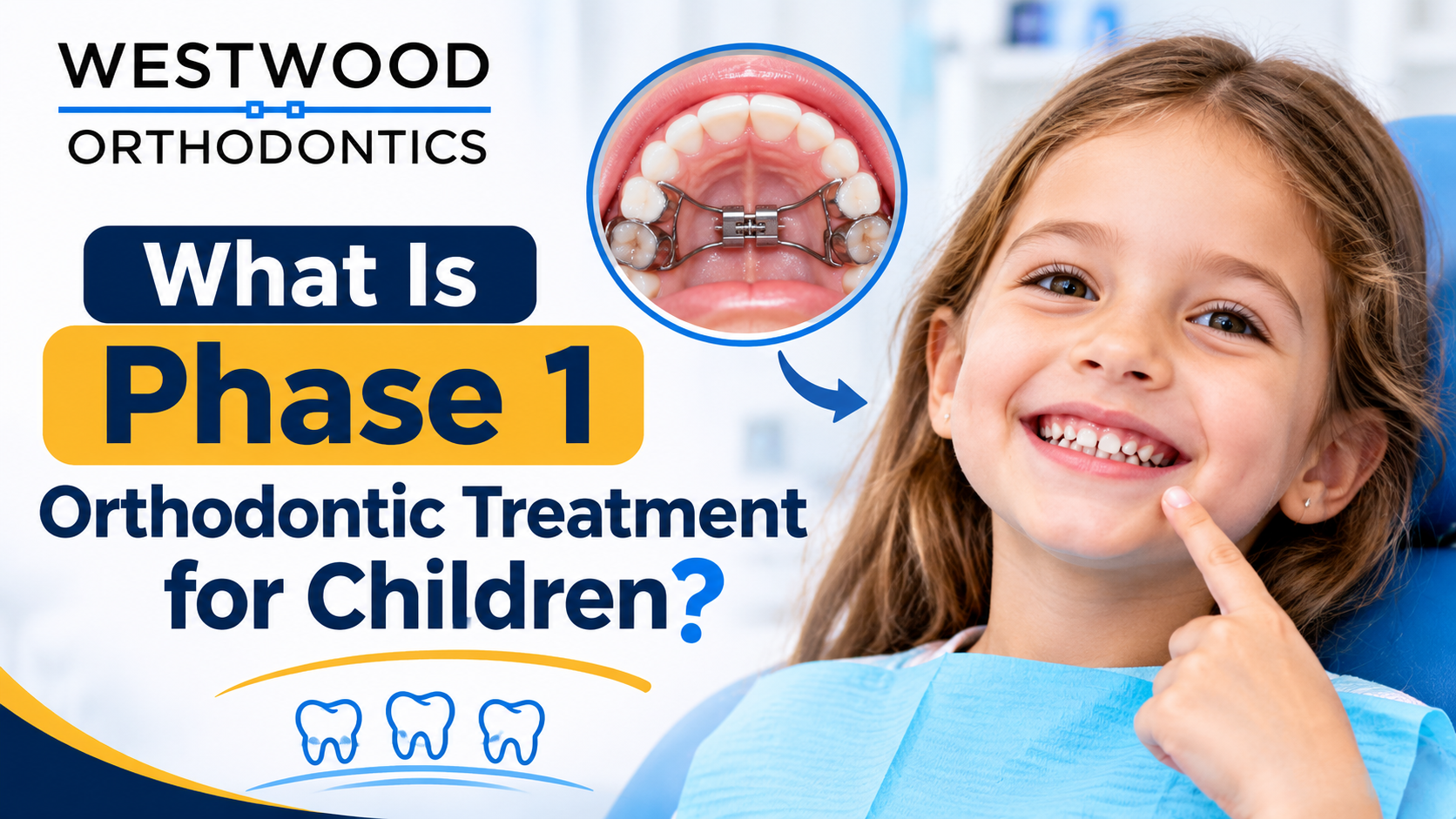
Phase 1 orthodontic treatment is early-stage care for children ages 6 to 10, when they have both baby and permanent teeth. During this, the dentist guides jaw growth to create space for incoming teeth. It helps in fixing bite problems before they become harder to treat.
But this treatment isn’t essential for every kid, so parents may wonder whether their child needs it. As they’re so young and it’s their early growing years, parents often wonder whether braces are safe. This guide has everything parents need to know. We explain what Phase 1 treatment is, which problem it addresses, and what tools are used during treatment. We also cover how it differs from Phase 2, so you can make a confident, informed decision.
What Is Phase 1 Orthodontic Treatment?
Phase 1 orthodontic treatment, also called early or interceptive orthodontics, is a targeted stage of care that starts when some baby teeth are still present. Its goal is to guide growth and fix developing problems, not to put every child in braces. The American Association of Orthodontists explains that early treatment aims to intercept problems, remove the cause when possible, guide jaw and facial bone growth, and create space for incoming permanent teeth. The main goals are:
- Guide your child’s upper or lower jaw growth into better alignment.
- Widen narrow arches to make room for permanent teeth.
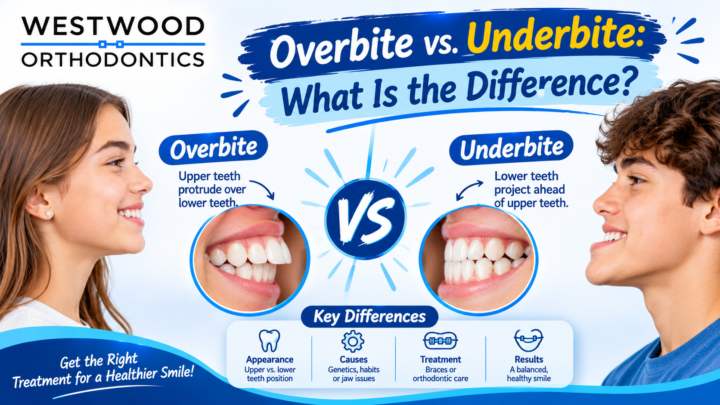
- Correct bite problems such as crossbites, underbites, overbites, and open bites.
- Curb childhood habits like thumb sucking or tongue thrusting that can change bone shape.
At What Age Can a Child Need Early Orthodontic Treatment?

A child may need early orthodontic treatment between ages 6 and 10, and the AAO recommends a first checkup no later than age 7. Some children are evaluated even sooner if a problem is spotted. By age 7, many children have enough permanent teeth for an orthodontist to see how the teeth and jaws are developing. Not every early visit leads to treatment, and that is perfectly normal. After the exam, the orthodontist may say no treatment is needed, that your child should be monitored, or that an early problem is ready to be treated.
What Dental Problems Can Phase 1 Treatment Address?
Phase 1 treatment can address crowding, crossbites and other bite problems, narrow dental arches, and jaw growth differences. The earlier these problems are found, the more options your orthodontist has.
Crowded or Misaligned Teeth
When a small jaw leaves too little room, permanent teeth can come in crooked or stuck. Making space early can reduce crowding later and, in some cases, lower the chance of extractions. It can also help permanent teeth come in straighter on their own.
Crossbites and Other Bite Problems
A crossbite means some upper teeth bite inside the lower teeth. According to Invisalign, citing a Cochrane review, 1% to 16% of children with only baby teeth have posterior crossbites, and most remain after adult teeth come in. That is one reason early evaluation matters, since a crossbite rarely fixes itself.
Narrow Dental Arches
A narrow upper jaw can crowd teeth and cause bite problems. Widening the arch while the jaw is still growing gives teeth the room they need and can reduce the need for later extractions.
Issues With Jaw Growth
If your child’s upper and lower jaws grow at different rates, the bite can end up uneven. Early treatment can guide that growth, which is much easier while a child is still growing than after growth slows down.
What Appliances Orthodontists Use in Phase 1 Treatment?
Phase 1 treatment uses various appliances to fix the issues. Your dentist chooses the tools based on your child’s growth and bite. Here are a few important tools your dentist may use in Phase 1 treatment.
Palatal Expanders
This is a common tool orthodontists use in treatment. The expander sits across the roof of your child’s mouth and helps widen the upper jaw. They work best while your child is growing. Most children feel some pressure or mild soreness at first. But it lasts for a few days and then feels normal.
Partial Braces
Partial braces go on only a few permanent teeth, often the front ones, to fix a specific problem. They are usually in place for a limited time and do not mean full braces right away. Because the rest of the teeth are still coming in, your orthodontist treats only what needs help now.
Other Orthodontic Appliances
Space maintainers keep space open if a baby tooth is lost too early. Functional appliances and headgear help modify jaw growth. In some cases, removing certain baby teeth at the right time is enough. Your orthodontist will explain why each tool is chosen.
Does Every Child Need Phase 1 Treatment?
Not every child needs Phase 1 treatment, and many do not need it at all. It is recommended only when a developing problem is easier to fix early. Many children are simply monitored as they grow.
The AAO explains that problems such as crossbites, underbites, severe crowding, missing teeth, and thumb or pacifier habits may require early treatment. To fix these problems, your orthodontist may recommend phase 1 treatment. It is recommended if your child has any of the following problems.
- Your child has a clearly visible crossbite or underbite.
- It is also recommended if your child has severe crowding or a narrow upper jaw.
- You may need it if a child loses teeth early or has late-erupting teeth.
- This treatment is also used when a kid has a habit such as thumb sucking.
What Happens After Phase 1 Treatment Ends?
Once Phase 1 is completed, your child enters a monitoring period. During this time, the remaining permanent teeth come in. Dentists closely monitor progress at regular visits and decide whether your child needs a second phase.
The dentist may ask your child to wear a retainer to maintain the results. Some children still need a second phase of treatment once all permanent teeth come in. A clear treatment plan helps you know what to expect. However, during this resting stage, your child needs proper oral hygiene. Encourage regular brushing, flossing, and dental checkups.
How Is Phase 1 Treatment Different From Phase 2?
Phase 1 treatment is an early treatment for children with mixed teeth. Phase 2 is full treatment that uses braces to correct alignment once permanent teeth come in. Phase 1 guides growth, but Phase 2 fixes alignment problems.
Feature | Phase 1 | Phase 2 |
| Typical age | About 6 to 10 years | About 11 to 14 years |
| Teeth present | Mix of baby and permanent teeth | Most or all permanent teeth |
| Main goal | Guide jaw growth, make space, fix early bite issues | Fine-tune final bite and alignment |
| Common tools | Expanders, partial braces, space maintainers | Full braces or clear aligners |
| Typical length | About 6 to 18 months | Varies by case |
Frequently Asked Questions
Does Phase 1 Treatment Mean a Child Will Avoid Braces Later?
No, it depends on your child’s tooth condition. Phase 1 can make later treatment simpler, but some children still need a second phase after all permanent teeth come in.
How Long Does Early Orthodontic Treatment Take?
Phase 1 usually lasts 6 to 18 months, and many cases take about 9 to 12 months. Your orthodontist can give a closer estimate.
Is Phase 1 Treatment Painful?
Most children feel pressure or mild soreness for a few days after an appliance is placed or adjusted, rather than sharp pain. Soft foods and a gentle brushing routine make those first days easier.
When Should Parents Schedule an Orthodontic Evaluation?
Schedule an evaluation as soon as you notice a problem, and no later than age 7. The AAO notes that no referral is needed, and many orthodontists offer free initial consultations.
Final Thoughts
Phase 1 orthodontic treatment is recommended for kids with issues involving both baby and permanent teeth. At an early stage, between ages 6 and 10, some kids have both baby teeth and permanent teeth. They need proper jaw guidance to provide space for incoming teeth. Orthodontists address this with phase 1 orthodontic treatment. However, it is not always the priority; some kids only need monitoring. Others may need phase 2 treatment after phase 1. So, a specialized orthodontist can better guide you on what’s best for your kids.
Westwood Orthodontics can help you decide whether early treatment makes sense for your child. Schedule a consultation with Westwood Orthodontics today.
Westwood Orthodontics
A Smile Can Change Everything
Braces & Invisalign for kids, teens & adults in Los Angeles, CA. Board certified orthodontists — schedule your free consultation today!
Schedule Free Consultation