
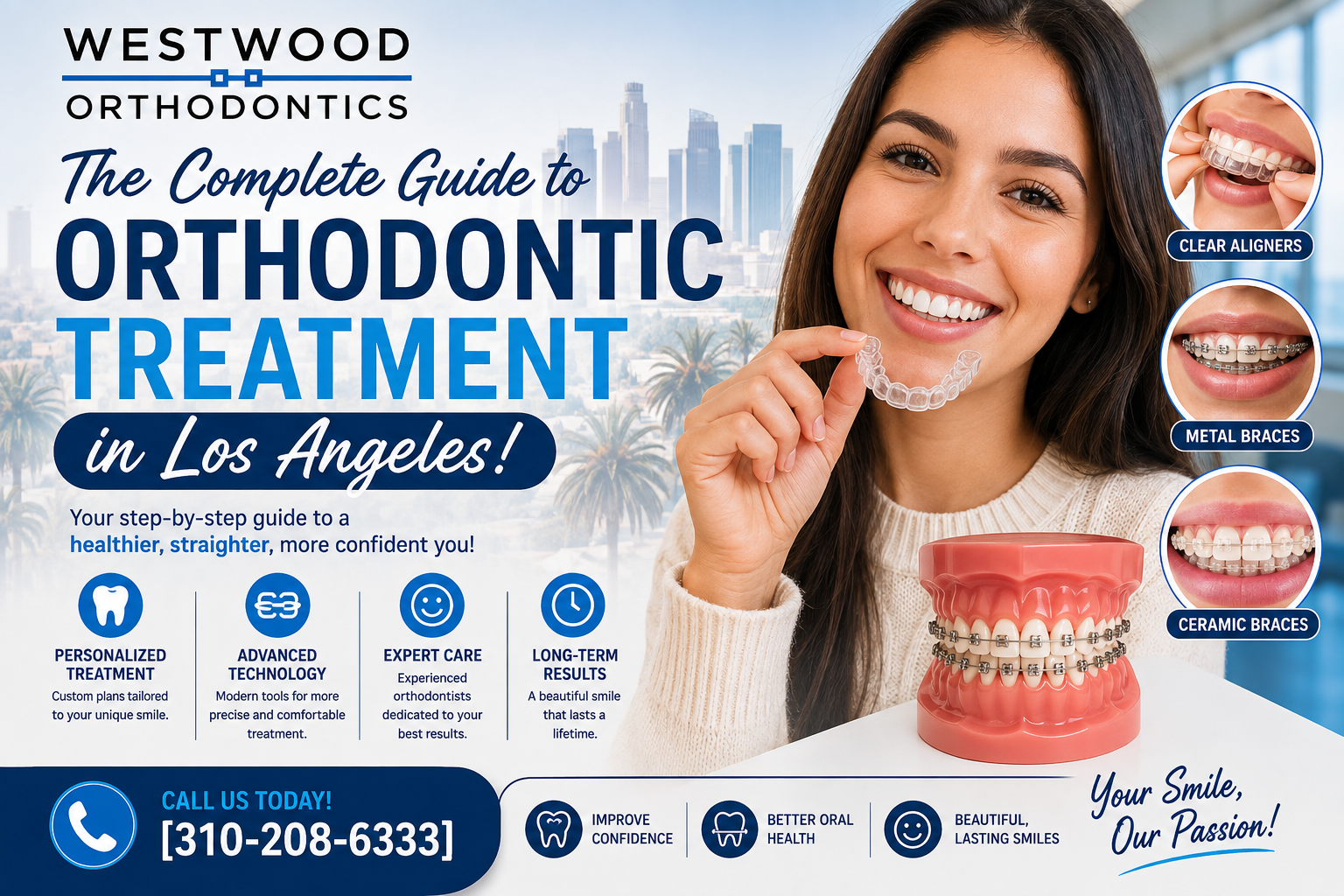
Orthodontic care in Los Angeles has many options for everyone, like traditional metal braces, ceramic brackets, and clear aligners. According to most orthodontists in Los Angeles, an initial evaluation should be around age 7, and treatment takes 12 to 24 months to complete.
For viewing your child’s braces Los Angeles options, comparing adult braces Los Angeles treatment, or understanding retainers Los Angeles after treatment, our guide has you covered. It has everything, like available appliances, daily care tips, foods to avoid, and what to do in an orthodontic emergency.
What Orthodontic Treatment Options Are Available in Los Angeles?
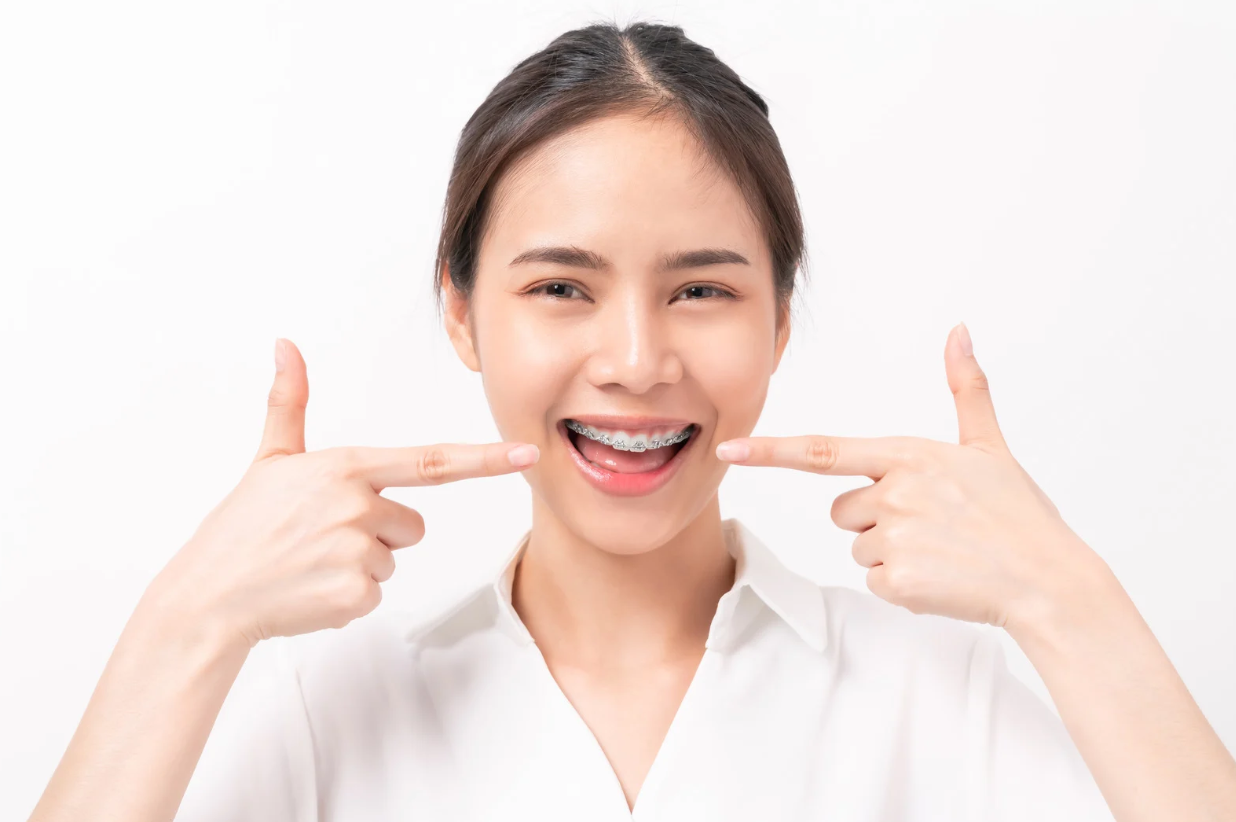
In Los Angeles, you will find 4 main options: traditional metal braces, ceramic braces, clear aligners, and lingual braces. Each one differs in visibility, comfort, and cost. You must know these orthodontic treatment options for selecting the right one according to your smile and lifestyle.
Traditional Metal Braces
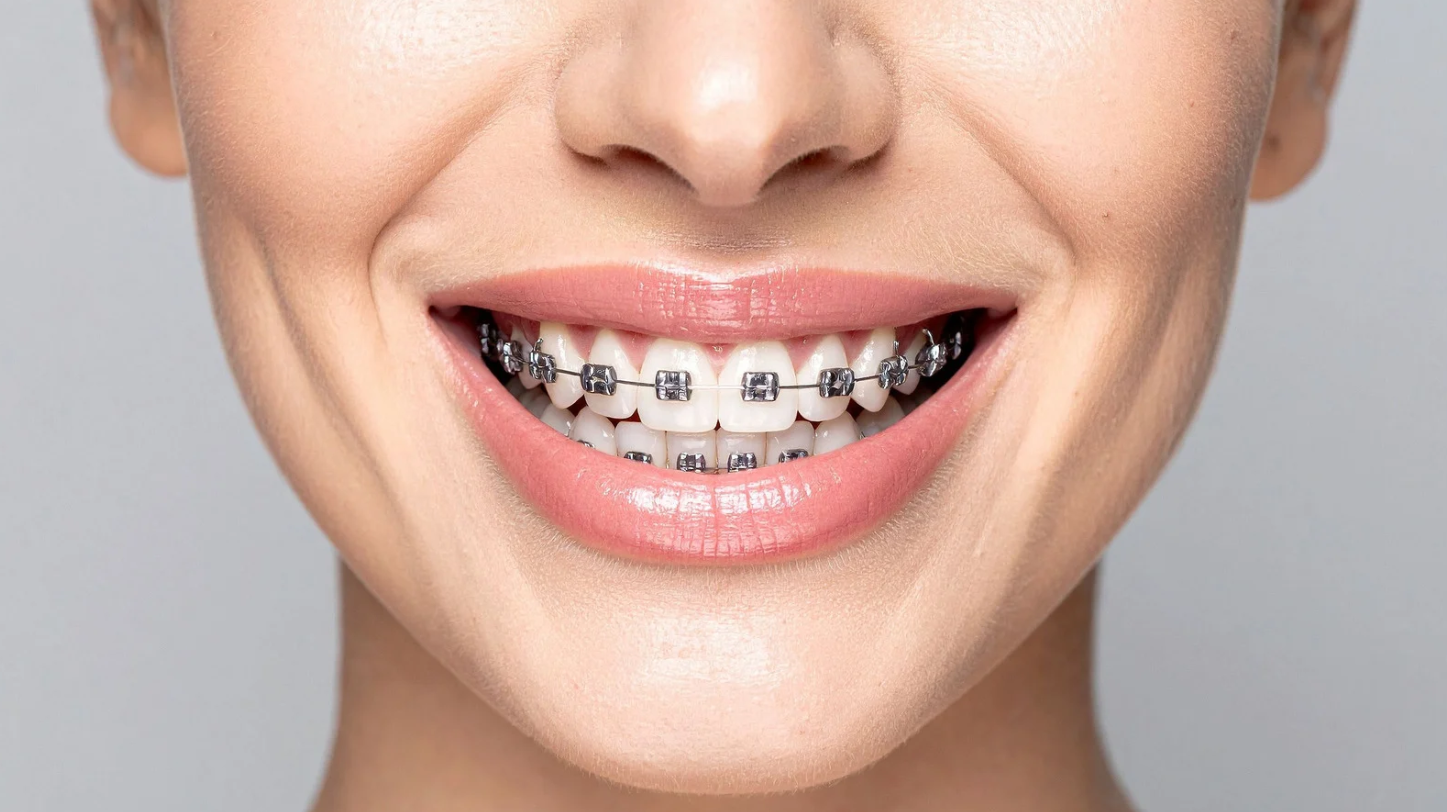
In traditional braces in Los Angeles, durable, highly effective stainless steel brackets are used for serious bite and alignment issues. They remain important for severe malocclusion cases, such as overbite, underbite, or crossbite issues.
There is a connection between metal brackets and archwires. Sometimes, small orthodontic elastics are also used to perfect bite alignment. Being the most visible option, modern brackets are now noticeably smaller and more comfortable than previous ones.
Ceramic Braces
Tooth-colored clear brackets make ceramic braces in Los Angeles look more natural, so they’re less visible. Their results are the same as those of metal brackets, but they are the preferred choice for patients seeking a more discreet option.
Because ceramic brackets are larger and more fragile than metal ones, patients need to be more careful with them. They have more dietary restrictions. Cleaning around brackets is essential to prevent staining or breakage over time.
Clear Aligners
Patients love clear braces Los Angeles due to removable, transparent plastic trays, such as Invisalign. Also, they wear them for 20 to 22 hours a day. Invisalign treatment uses a series of custom aligner trays to slowly shift teeth without brackets or wires.
New trays become necessary every 1 to 2 weeks. Due to the removable feature of trays, eating and cleaning become easier than with fixed ones. This convenience is the major reason clear aligners are much more popular among busy adults and image-conscious teens.
Lingual Braces
In lingual braces, custom brackets connect to the back of the teeth, so they remain completely hidden during daily activities. They are a highly specialized option for patients seeking fixed appliances with no visible hardware on the front.
Because each bracket is custom-fabricated to fit the back surfaces of your teeth, lingual braces require extra planning time. Also, its good results are possible with a higher level of expertise from your provider than with standard front-facing appliances.
The following table is a comparison of these four main options side by side:
Treatment Option | Visibility | Typical Duration | Best For |
| Traditional Metal Braces | Most visible | 12–24 months | Complex bite and alignment corrections |
| Ceramic Braces | Subtle, Tooth colored | 12–24 months | Teens and adults wanting a less noticeable look |
| Clear Aligners (Invisalign) | Nearly Invisible | 12–24 months | Removable convenience for adults and teens |
| Lingual Braces | Hidden behind teeth | 18–30 months | Total visual discretion during daily activities |
What Does the Orthodontic Treatment Process Look Like?
Orthodontic treatment has three stages: an initial consultation with digital imaging, active realignment, and a retention phase to have good results. With an understanding of this orthodontic treatment plan structure, you can expect what will happen at each step.
Consultation and 3D Imaging
In orthodontic consultation, your provider uses digital scans and dental X-rays to map your teeth and bite. You will also get a treatment duration. This orthodontic evaluation is the basis of perfect treatment planning.
With modern 3D dental imaging, your orthodontist takes a clear view of your upper and lower teeth, jaw structure, and dental arch. In this way, your treatment will be more precise than older treatments with less advanced diagnostic tools.
Active Realignment
Regular adjustments or tray transitions apply light, continuous pressure to achieve gradual tooth movement and improve bite alignment over time. Patients visit their orthodontist every 4 to 8 weeks to see treatment progress during this phase.
This is the stage where real transformation happens. Here, brackets, wires, and elastic bands work together to deal with crowding, spacing, and bite issues. You cannot ignore consistency here, as skipping appointments or wearing your aligner for less time increases your treatment timeline.
Retention Phase
You must wear custom removable or fixed retainers in Los Angeles consistently after treatment to prevent teeth from shifting back. This post-treatment retention phase is just as important as active treatment in achieving excellent treatment results.
Orthodontic Care for Every Age Group
Los Angeles orthodontic clinics mostly serve three different age groups. From early childhood evaluations to fully grown adult smiles, each one has different biological needs.
Pediatric Orthodontics
According to providers, age 7 is the ideal time for pediatric braces in Los Angeles. It is the mix of baby and adult teeth that helps specialists catch jaw development issues early. Early evaluation simplifies future treatment and shortens the total time in braces.
Orthodontic Treatment for Teens
Most teens begin full orthodontic treatment between ages 11 and 14, after the eruption of permanent teeth. Here, natural growth spurts make tooth movement more efficient than treatment started later in life.
Adult Orthodontics
Adult orthodontics is now common everywhere, as many adults choose discreet options like ceramic braces or clear aligners. Roughly 1 in 4 orthodontic patients today is an adult, according to the American Association of Orthodontists. It shows how common adult treatment has become.
Because adult bone structure is denser than that of a child or teenager, treatment may take longer to achieve the same level of tooth movement. Also, modern tools enable adults to achieve excellent results whenever they want.
How Do You Care for Braces and Aligners Daily?
Daily care for braces or aligners depends on three things: regular oral hygiene, smart food choices, and wearing protective gear during sport. Do those consistently and you’ll avoid most damage and stay on track with your treatment.
Daily Hygiene
Brush after every meal and floss once a day. With braces, use floss threaders or interdental brushes to get around the wires. Daily brushing and flossing take extra minutes, but it matters. If plaque gets trapped around brackets, you can end up with white spots on your teeth when the braces come off. Brushing and flossing well now protects your smile for years later.
Dietary Restrictions
Skip hard, sticky, or chewy foods like caramel, ice, and popcorn as they can break brackets or bend wires. Also be careful with foods you have to bite into hard, like whole apples. Just cut them into small pieces first.
Protection During Sports
If you play contact sports, wear a mouthguard. It protects your teeth and your braces, and saves you from emergency visits.
What Foods Should You Avoid and Enjoy With Braces?
Some foods are a no-go. Others are totally fine. You must know which ones are more useful and less stressful.
Foods to Avoid
With braces, you should not use anything chewy, sticky, crunchy, or hard, such as hard rolls, bagels, or licorice, as these put a lot of strain on brackets and wires. Crunchy things like chips, popcorn, and ice are some common reasons braces break. Sticky treats such as gum, caramel, and toffee can pull brackets right off.
Hard foods like nuts, taco shells, and seeds are also risky. And anything you have to bite into with force, whole apples, raw carrots, corn on the cob, or pizza crust, should be cut into smaller pieces first to avoid damage.
Foods to Enjoy
The good news is you still have many options. Dairy foods like pudding, soft cheese, and milk are totally safe. Soft breads like flour tortillas, muffins, and pancakes work great too. For meals, use soft-cooked grains like pasta, rice, and quinoa, plus tender meats, poultry, and fish.
Steamed vegetables, soft beans, applesauce, and bananas are easy on braces. And you do not have to skip dessert; ice cream and soft cake are perfect braces-friendly treats. It means there is nothing to be restrictive at all.
What Should You Do During an Orthodontic Emergency?
Most orthodontic emergencies result from injury or from normal wear and tear on braces and wires. Knowing what to do quickly can save you from trouble. The best way to avoid emergencies? Wear a mouthguard during sports and maintain good dental health to avoid emergencies altogether.
Loose or Poking Wires
If a wire comes loose, cover the pokey spot with orthodontic wax for quick relief. Then call your orthodontist to get it fixed.
Loose Brackets and Bands
Leave the loose bracket or band where it is and put some wax over it to keep it from rubbing. Do not try to adjust the elastics or bands yourself, as you could break something else.
Headgear Discomfort
Headgear usually feels uncomfortable if you are not wearing it according to the instructions, or if the face bow got bent. Stick to the hours your orthodontist told you, and it will get more comfortable. If the pain does not go away, give your orthodontist a call.
Lost Retainers
Contact your dentist as soon as possible to get new impressions and a replacement. Teeth can shift fast. It is good to order a backup set in advance or ask about a fixed retainer that stays in place.
Lost Invisalign Aligners
Good news! Keep all your old aligners. If you lose the one you are wearing, just go back to wearing your last one until your replacement arrives.
FAQs
At what age should my child first see an orthodontist?
Most orthodontists suggest a first check-up around age 7. At that age, kids have a mix of baby and adult teeth, so it becomes easier to spot jaw growth issues early.
How long does orthodontic treatment usually take?
Most plans take about 12 to 24 months. Lingual braces and more complex cases can sometimes run up to 30 months.
Is Invisalign as effective as traditional braces?
Yes. Invisalign works well for most mild-to-moderate cases. For more complex bite problems, traditional braces or ceramic braces are usually the better choice.
What should I do if a wire is poking my cheek?
Put a little orthodontic wax over the area for quick relief. Then call your orthodontist to book a repair.
Can adults still get orthodontic treatment?
Absolutely. About 1 in 4 orthodontic patients today are adults. With options like ceramic braces and clear aligners, treatment is more discreet now.
What happens if I lose a retainer?
Call your dentist right away. Teeth can start shifting fast. You will need new impressions so they can make a replacement for you.
Final Thoughts!
Orthodontic treatment in Los Angeles has options for every age and lifestyle, from classic metal braces to nearly invisible clear aligners. Most people finish in 12 to 24 months. Knowing your options, how to care for your teeth daily, and what to do in an emergency makes the whole process a lot easier.
Westwood Orthodontics is here to help Los Angeles patients of all ages with a special orthodontic treatment plan tailored to your smile goals. Schedule a consultation right now to have straighter, healthier teeth forever.
Schedule a Consultation Today!

Westwood Orthodontics
A Smile Can Change Everything
Braces & Invisalign for kids, teens & adults in Los Angeles, CA. Board certified orthodontists — schedule your free consultation today!
Schedule Free Consultation