
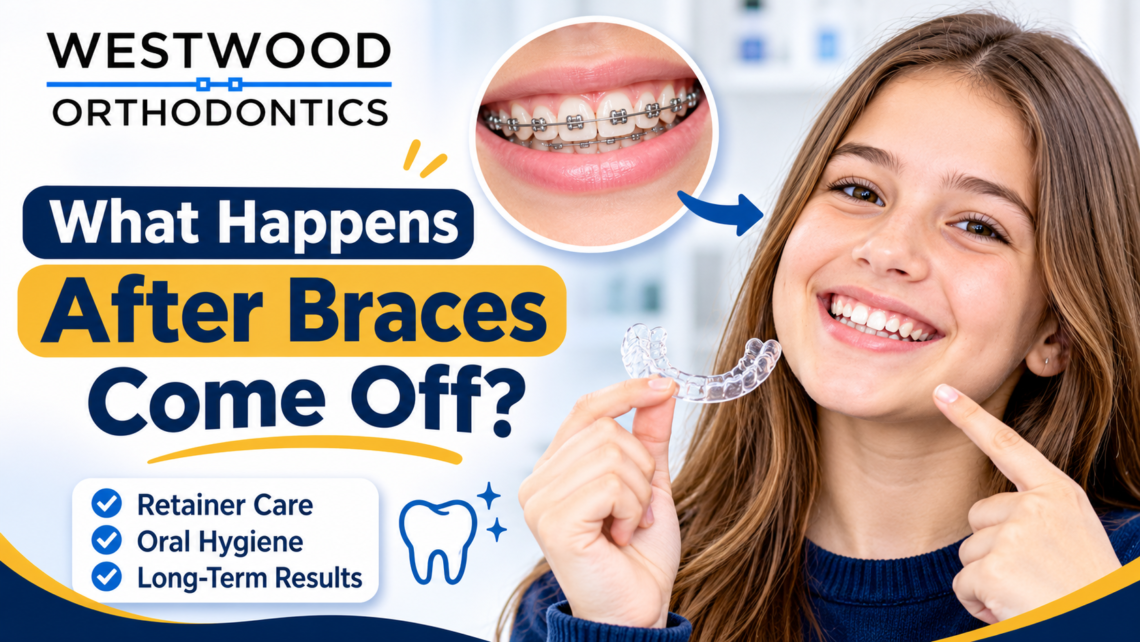
After your braces come off, your orthodontist removes the brackets and wires and polishes your teeth. They also fit you for a retainer to keep them in their new positions. Your teeth may feel smooth and a little sensitive for a few days. After that, wearing your retainer every day becomes a part of your routine.
Many patients are surprised to know that treatment doesn’t end when they remove their braces. This article explains what happens after your braces come off and why retainers are important. We also cover the different types, how long you should wear them, and how to care for them.
Your braces removal visit is usually quick and comfortable, and most patients leave with a smile. They may also take photos or scans to see how your teeth look. You will usually feel only minor pressure during the procedure. You may feel a little pressure or hear a clicking as the brackets come off.
Your orthodontist polishes your teeth until they feel smooth. After that, they may also take scans or X-rays to record your final alignment. They use these impressions or scans to make your retainer. After your visit, you may notice a few changes:
You need a retainer after braces because your teeth can move back to their old positions. A retainer keeps your teeth in place while the nearby bone and gums settle. According to the American Association of Orthodontists, the bone around your teeth stays flexible during treatment.
Without a retainer, your teeth can start moving back into their natural positions. A retainer protects the time and effort you already put into your smile. Even straight teeth can slowly shift out of place without a retainer. This might be frustrating after months or years of treatment.
You can choose from three types: clear removable retainers, Hawley retainers, and fixed (bonded) retainers. Your orthodontist can help you to choose the best for your teeth and daily routine.
Clear retainers are plastic trays that fit over your upper and lower teeth. Many people like them because they are easy to wear and hard to notice. The AAO says clear retainers are lighter, more comfortable, and less visible than Hawley retainers.
Hawley retainers use an acrylic base with metal wires and clasps. They are easier to see and may need some adjustments over time. A National Elf Service summary of a Cochrane review looked at 47 trials and 4,377 patients. It found that Hawley retainers were less likely to fail than clear plastic ones and had similar stability. The review also found that only a few studies followed patients for two years or longer. This makes it harder to draw clear conclusions.
A fixed retainer is a thin wire bonded to the back of your teeth, usually the lower ones. It stays in place all day, so you do not have to worry about forgetting to wear it. However, the wire can break or come loose, and flossing takes a little extra care.

During the first few months, most people wear a removable retainer all day. After that, they usually only wear it at night. Many orthodontists recommend wearing your retainer at night for a long time to keep your teeth in place.
The AAO suggests wearing your retainer full-time for a few months before switching to nighttime wear. Ideally, you should wear it full-time. Your orthodontist will tell you how long you should wear your retainer, so follow their instructions carefully. A common plan is to wear your retainer full-time at first, then move to nighttime wear. However, every patient is different.
Your teeth may move after braces because the surrounding bone and gums need time to settle. They may also shift because of normal aging, tongue habits, and the daily pressure of chewing. A retainer keeps your teeth in their right place. Your teeth may feel a little loose right after treatment as the surrounding bone and tissues settle. That is very natural. If you do not wear your retainer, your teeth may shift quickly. You may need more treatment later. If your retainer feels tight when you put it back in, your teeth may have moved.
When you remove your retainer, use a soft toothbrush and mild soap to clean it. You can also use a retainer cleanser once a week. Avoid using hot water because it will bend the plastic. The AAO recommends cleaning your retainer with a separate toothbrush and some mild soap. They also suggest soaking it once a week for 15 to 20 minutes. Bacteria can grow, so clean your retainer every time you take it out. Here are some other good habits to follow:
If your retainer breaks or you lose it, go to your orthodontist as soon as possible. Without it, your teeth may begin to shift within a few days. Do not try to fix it by bending or gluing it. Your orthodontist can repair it or make a replacement. The sooner you contact them, the easier it will be to resolve the issue. Keep any broken pieces and bring them to your appointment.
The AAO recommends wearing your retainer indefinitely, usually at night. Your orthodontist can tell you what schedule works best for you.
Without a retainer, your teeth can shift after braces. They may slowly move back toward their old positions. Even with a retainer, your teeth may move a little if you skip wearing it at night. That is why it is important to wear it regularly.
Take your removable retainer out before eating, then clean it and put it back in. A fixed retainer stays in place at all times. Avoid very hard or sticky foods that could bend or loosen the wire.
Your teeth may start moving back to their old positions, leading to a relapse. Your retainer may feel too tight or too loose. You may need a new one or more orthodontic treatment. So, going back to wearing your retainer at night early on can sometimes help stop bigger issues.
After your braces come off, you will have a polished smile and may feel some sensitivity for a few days. Your retainer will help keep your teeth in place. Wear your retainer as directed and clean it daily. Keep up with your dental checkups, and see your orthodontist as soon as possible if it breaks. Wearing your retainer regularly helps keep your teeth in place. Regular checkups can also catch small problems early. Westwood Orthodontics is here to help you even after your braces come off. Schedule your consultation with Westwood Orthodontics today.
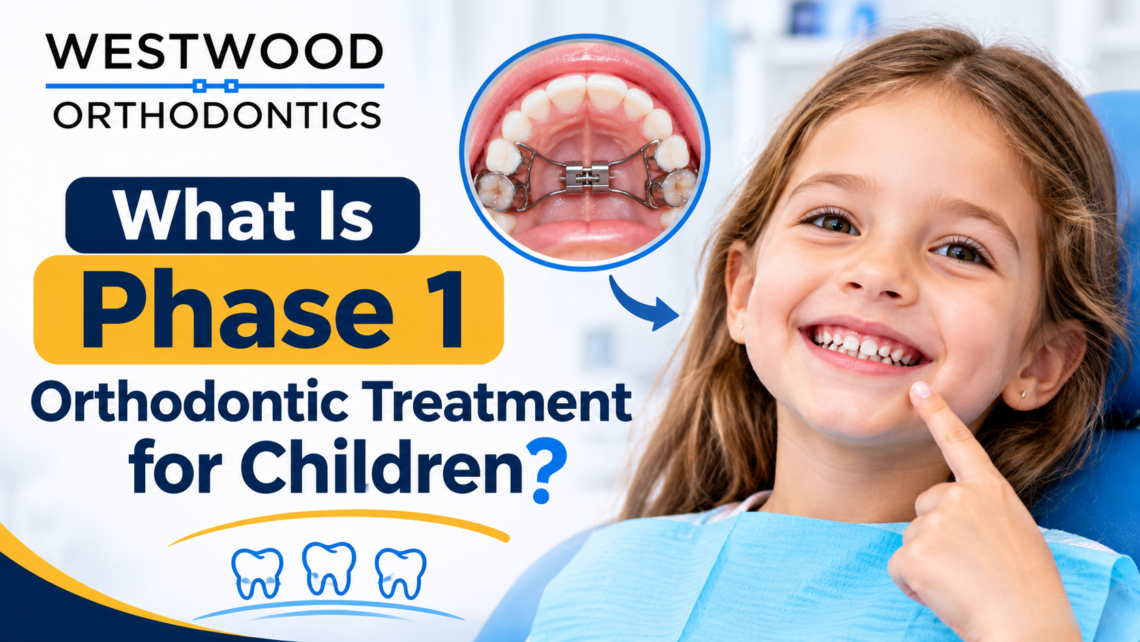
Phase 1 orthodontic treatment is early-stage care for children ages 6 to 10, when they have both baby and permanent teeth. During this, the dentist guides jaw growth to create space for incoming teeth. It helps in fixing bite problems before they become harder to treat.
But this treatment isn’t essential for every kid, so parents may wonder whether their child needs it. As they’re so young and it’s their early growing years, parents often wonder whether braces are safe. This guide has everything parents need to know. We explain what Phase 1 treatment is, which problem it addresses, and what tools are used during treatment. We also cover how it differs from Phase 2, so you can make a confident, informed decision.
Phase 1 orthodontic treatment, also called early or interceptive orthodontics, is a targeted stage of care that starts when some baby teeth are still present. Its goal is to guide growth and fix developing problems, not to put every child in braces. The American Association of Orthodontists explains that early treatment aims to intercept problems, remove the cause when possible, guide jaw and facial bone growth, and create space for incoming permanent teeth. The main goals are:

A child may need early orthodontic treatment between ages 6 and 10, and the AAO recommends a first checkup no later than age 7. Some children are evaluated even sooner if a problem is spotted. By age 7, many children have enough permanent teeth for an orthodontist to see how the teeth and jaws are developing. Not every early visit leads to treatment, and that is perfectly normal. After the exam, the orthodontist may say no treatment is needed, that your child should be monitored, or that an early problem is ready to be treated.
Phase 1 treatment can address crowding, crossbites and other bite problems, narrow dental arches, and jaw growth differences. The earlier these problems are found, the more options your orthodontist has.
When a small jaw leaves too little room, permanent teeth can come in crooked or stuck. Making space early can reduce crowding later and, in some cases, lower the chance of extractions. It can also help permanent teeth come in straighter on their own.
A crossbite means some upper teeth bite inside the lower teeth. According to Invisalign, citing a Cochrane review, 1% to 16% of children with only baby teeth have posterior crossbites, and most remain after adult teeth come in. That is one reason early evaluation matters, since a crossbite rarely fixes itself.
A narrow upper jaw can crowd teeth and cause bite problems. Widening the arch while the jaw is still growing gives teeth the room they need and can reduce the need for later extractions.
If your child’s upper and lower jaws grow at different rates, the bite can end up uneven. Early treatment can guide that growth, which is much easier while a child is still growing than after growth slows down.
Phase 1 treatment uses various appliances to fix the issues. Your dentist chooses the tools based on your child’s growth and bite. Here are a few important tools your dentist may use in Phase 1 treatment.
This is a common tool orthodontists use in treatment. The expander sits across the roof of your child’s mouth and helps widen the upper jaw. They work best while your child is growing. Most children feel some pressure or mild soreness at first. But it lasts for a few days and then feels normal.
Partial braces go on only a few permanent teeth, often the front ones, to fix a specific problem. They are usually in place for a limited time and do not mean full braces right away. Because the rest of the teeth are still coming in, your orthodontist treats only what needs help now.
Space maintainers keep space open if a baby tooth is lost too early. Functional appliances and headgear help modify jaw growth. In some cases, removing certain baby teeth at the right time is enough. Your orthodontist will explain why each tool is chosen.
Not every child needs Phase 1 treatment, and many do not need it at all. It is recommended only when a developing problem is easier to fix early. Many children are simply monitored as they grow.
The AAO explains that problems such as crossbites, underbites, severe crowding, missing teeth, and thumb or pacifier habits may require early treatment. To fix these problems, your orthodontist may recommend phase 1 treatment. It is recommended if your child has any of the following problems.
Once Phase 1 is completed, your child enters a monitoring period. During this time, the remaining permanent teeth come in. Dentists closely monitor progress at regular visits and decide whether your child needs a second phase.
The dentist may ask your child to wear a retainer to maintain the results. Some children still need a second phase of treatment once all permanent teeth come in. A clear treatment plan helps you know what to expect. However, during this resting stage, your child needs proper oral hygiene. Encourage regular brushing, flossing, and dental checkups.
Phase 1 treatment is an early treatment for children with mixed teeth. Phase 2 is full treatment that uses braces to correct alignment once permanent teeth come in. Phase 1 guides growth, but Phase 2 fixes alignment problems.
Feature | Phase 1 | Phase 2 |
| Typical age | About 6 to 10 years | About 11 to 14 years |
| Teeth present | Mix of baby and permanent teeth | Most or all permanent teeth |
| Main goal | Guide jaw growth, make space, fix early bite issues | Fine-tune final bite and alignment |
| Common tools | Expanders, partial braces, space maintainers | Full braces or clear aligners |
| Typical length | About 6 to 18 months | Varies by case |
No, it depends on your child’s tooth condition. Phase 1 can make later treatment simpler, but some children still need a second phase after all permanent teeth come in.
Phase 1 usually lasts 6 to 18 months, and many cases take about 9 to 12 months. Your orthodontist can give a closer estimate.
Most children feel pressure or mild soreness for a few days after an appliance is placed or adjusted, rather than sharp pain. Soft foods and a gentle brushing routine make those first days easier.
Schedule an evaluation as soon as you notice a problem, and no later than age 7. The AAO notes that no referral is needed, and many orthodontists offer free initial consultations.
Phase 1 orthodontic treatment is recommended for kids with issues involving both baby and permanent teeth. At an early stage, between ages 6 and 10, some kids have both baby teeth and permanent teeth. They need proper jaw guidance to provide space for incoming teeth. Orthodontists address this with phase 1 orthodontic treatment. However, it is not always the priority; some kids only need monitoring. Others may need phase 2 treatment after phase 1. So, a specialized orthodontist can better guide you on what’s best for your kids.
Westwood Orthodontics can help you decide whether early treatment makes sense for your child. Schedule a consultation with Westwood Orthodontics today.
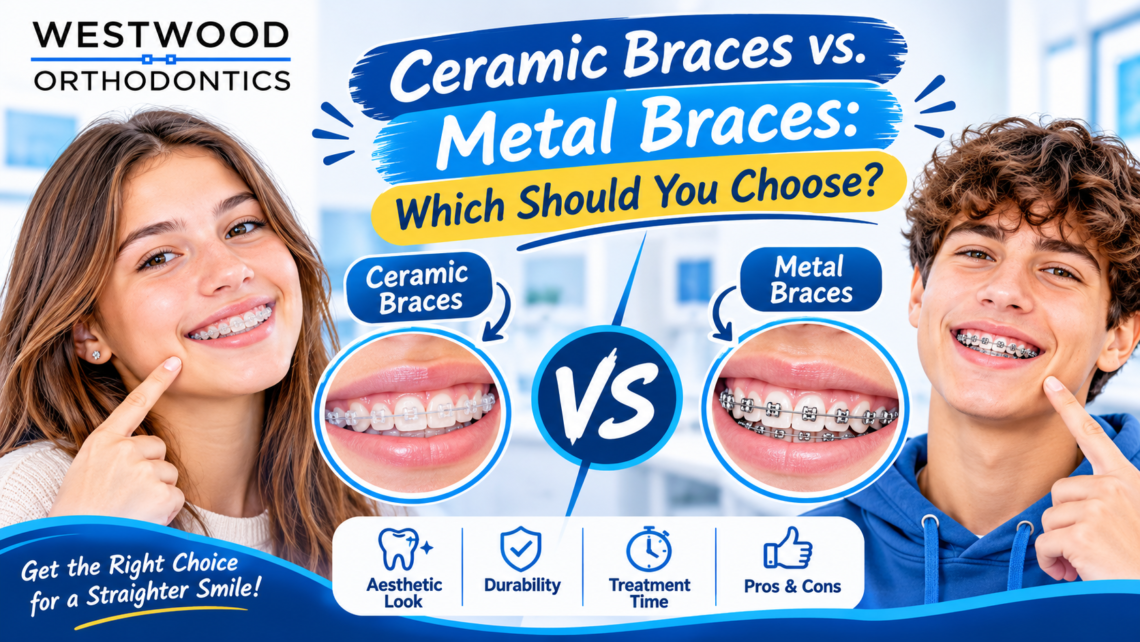
You can choose ceramic braces if you want a less noticeable, tooth-colored look. Metal braces are sturdier and more affordable, and they work well for complex cases. Both types of braces can straighten your teeth effectively. But your choice depends on your look preferences, budget, and treatment needs.
In this guide, we explain what each type of braces is and how they compare in comfort and care. We will also explain which works best for different dental problems and how to care for ceramic braces. We will also cover what to ask at your visit, so you can make the right choice and know what to expect.
Metal braces are the traditional type that is made from stainless steel. The brackets are attached to your teeth and connected with a wire. They are strong, reliable, and usually the affordable option.
For many years, orthodontists have used metal braces to treat almost every type of tooth movement. According to Colgate, metal brackets are silver in color and usually less expensive than ceramic braces. Many patients prefer colored elastic bands to personalize their braces. This is very popular with young patients. Metal braces have been used for years, so orthodontists trust them to treat a wide range of cases.
Ceramic braces work the same way as metal braces. Their clear or tooth-colored brackets blend in with your teeth, making them less visible. Many teens and adults choose ceramic braces because they are less visible, especially in photos. They are fixed in place, so like metal braces, they work around the clock without any effort on your part. According to Medical News Today, ceramic braces are usually more expensive than other options. They may also be a better option than clear aligners for some alignment issues.
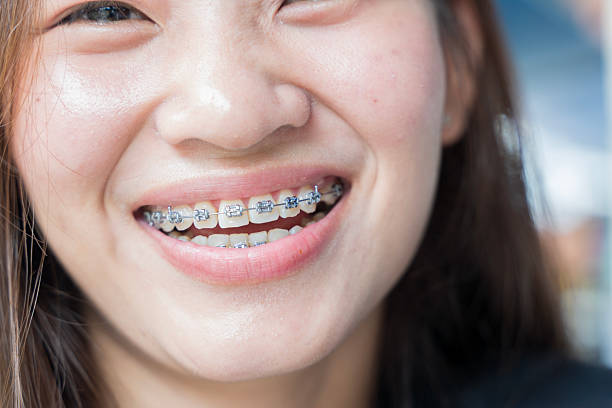
The table below shows the main differences.
Feature | Ceramic Braces | Metal Braces |
| Appearance | Clear or tooth-colored brackets that blend with enamel | Silver stainless steel brackets |
| Durability | More brittle and can chip or break easily | Very strong and resistant to breaking |
| Treatment speed | May take slightly longer in complex cases | Often faster and more precise for complex cases |
| Staining risk | Clear elastic ties can discolor | No staining issues with metal parts |
| Cost | Usually more expensive | Generally more affordable |
Ceramic brackets look just like your natural teeth. As a result, they are popular for work, school, and photos. Most people won’t notice them from a distance. Metal brackets are easier to see. However, many people like their classic look and colorful bands.
Both types of braces can cause soreness for a few days after fitting or adjustment. Most people can adjust within a week or two. If a bracket irritates your lips or cheeks, orthodontic wax can help. So, during these days, eating soft meals can be more comfortable. If the soreness lasts longer, see your orthodontist.
Medical News Today also reports that ceramic brackets are twice as likely to break as metal ones, citing a 2016 study. And a break can sometimes lengthen treatment. Metal brackets handle extra wear and tear better, which suits active kids and athletes. In practice, fewer broken brackets also mean fewer extra visits.
Metal braces are usually used for serious crowding, major bite issues, and complex tooth movements. Ceramic braces can also treat major alignment issues, including overbites. They are more commonly used for mild to moderate cases. Ceramic braces may be best for those with metal allergies or who need medical imaging because they have less metal.

Ceramic braces are popular with adults and older teens who prefer a less visible look. Metal braces usually work well for younger teens, active kids, and complex cases. Both types can work at any age if your orthodontist recommends them. Your lifestyle and needs often matter more than your age.
Discuss your goals, bite, budget, and lifestyle with your orthodontist to find the braces that suit you best. A proper exam helps you start with a clear treatment plan. It can also save you time and money by helping you avoid switching braces later. Prepare a list of questions before your visit. Here are a few to get you started:
The brackets resist stains, but the clear elastic ties can stain from coffee, tea, and sauces. Keep your braces clean to help prevent stains. Your orthodontist will replace the ties during regular visits.
Ceramic braces are more likely to break than metal braces. Medical News Today reports that they may break about twice as often.
Ceramic braces may take longer in some complex cases. This is because the brackets create more friction against the wire. For many people, the difference is small. Your orthodontist can give you a better idea of how long your treatment will take.
In some cases, yes, but metal braces are often a better choice for severe crowding because they offer more control. Your orthodontist can tell you after an exam.
Ceramic braces are less visible and effective for mild to moderate cases. However, metal braces are stronger and offer more control in difficult situations. These braces are usually more affordable. Both work well, and treatment usually takes 1 to 3 years. You can choose the right braces based on your bite, lifestyle, and budget. An orthodontist’s exam can help you decide. Looking at photos of both types can help you see how they might look on your teeth.
Westwood Orthodontics can help you compare ceramic and metal braces to get the best fit for you. Schedule your consultation with Westwood Orthodontics today.
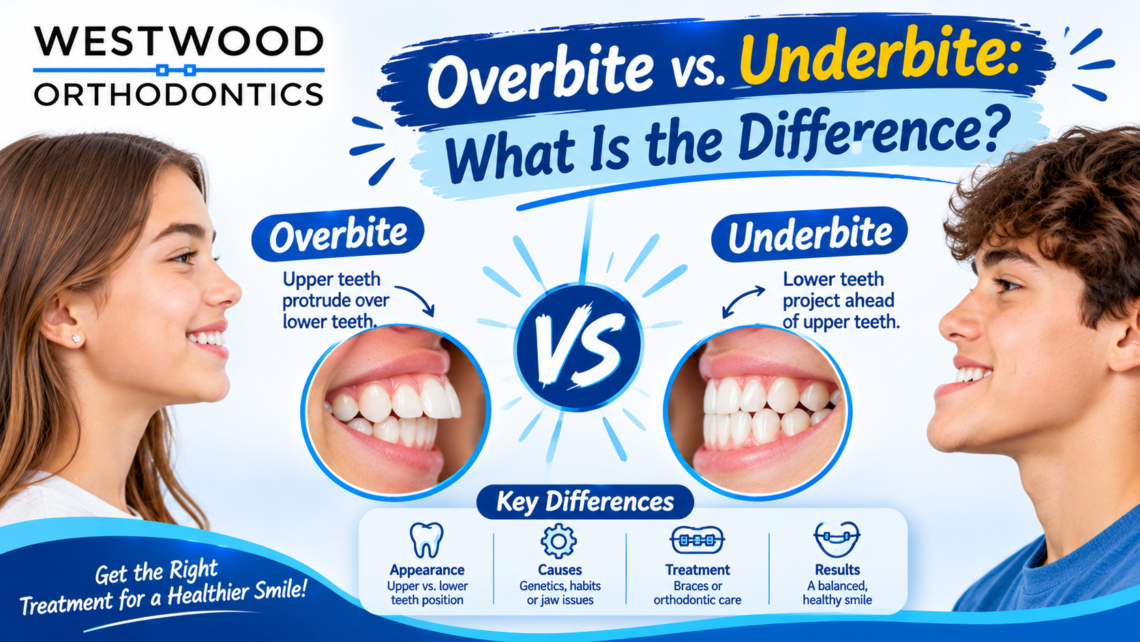
An overbite occurs when the upper front teeth cover too much of the lower front teeth. An underbite occurs when the lower front teeth and jaw sit in front of the upper teeth. Orthodontists can treat both, but the right treatment depends on the cause and the condition. These two problems sound similar, but many people get confused.
This guide explains what overbites and underbites are and what causes them. You will also learn how to spot a bite problem and how it can affect chewing. We also explain treatment options for adults and children, so you know what to expect at your first visit.
An overbite is when the upper front teeth overlap the lower front teeth too much. A slight overlap is normal. However, a deep overlap can irritate your gums and wear down your enamel.
The American Association of Orthodontists describes a deep bite as a condition where the upper teeth completely cover the lower teeth. Many orthodontists consider 2 to 3 millimeters of overlap normal. If the overlap is 4 millimeters or more, it is usually known as a deep overbite. Orthodontists often link an overbite to a Class II bite. This is when the lower jaw sits behind the upper jaw.
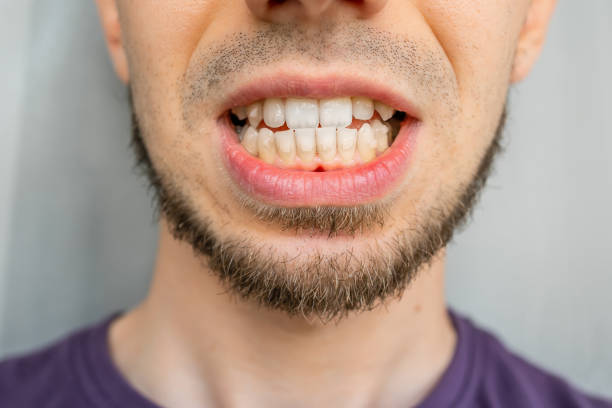
An underbite happens when the lower jaw and front teeth sit ahead of the upper teeth. This causes the lower teeth to close in front of the upper teeth. It affects about 5-10% of people worldwide. This makes an underbite less common than an overbite.
The AAO gives this estimate. It also explains that an underbite can be dental, skeletal, or a combination of both. An underbite is often known as a Class III bite. You may notice it more easily when looking at the face from the side. People with an underbite may have a more visible chin. From the side, their lower jaw may also appear to stick out. The table shows the main differences between the two problems.
Overbites and underbites often run in families. They can also develop because of differences in jaw size and growth, and childhood habits. Usually, these bite problems have multiple causes. That is why an orthodontic exam is important.
Jaw shape and bite patterns can run in families. If a parent or sibling has a similar bite, it may be a helpful clue. The AAO explains that an underbite can develop if the upper jaw grows too slowly or the lower jaw grows too much. Some common causes include:
If your top and bottom teeth do not line up when you close your mouth, you may have a bite problem. You may also experience jaw pain, trouble chewing, or worn-down teeth. An exam is the only way to determine which type you have.
Look in the mirror as you gently bite down, and take a clear photo if you can. If your upper teeth cover most of your lower teeth, you might have an overbite. If your lower teeth are in front of your upper teeth, you may have an underbite. These are some other signs you should look for:
An overbite or underbite can make chewing difficult because the teeth don’t line up properly. This can make it harder to bite and chew food. It also puts extra pressure on your jaw.
The AAO warns that misaligned teeth can wear down or chip over time. This can make it harder to eat and speak properly. An improper bite can also cause problems with the jaw joint. Some people don’t notice symptoms right away and may get used to them. Even so, a poor bite can cause bigger problems over time, like cracked teeth and sore jaw muscles.
Orthodontists use braces or clear aligners to move teeth and treat an overbite. They may also help children with their jaw growth. Adults who have serious overbites because of their jaw position may need jaw surgery.
Braces or clear aligners can usually treat mild to moderate overbites. However, rubber bands may be used to help adjust the bite. A retainer keeps the teeth in their new positions. Your orthodontist first checks whether the problem is with your teeth or your jaw. This helps to guide the treatment plan. Treatment time varies from case to case.

Orthodontists treat an underbite with braces, clear aligners, or growth appliances. The best option depends on whether the problem is with the teeth or the jaw. When growth is complete, serious underbites caused by jaw position usually require surgery.
Your treatment depends on your age and the reason for your underbite. Your orthodontist may also use a combination of methods. The three treatment options listed below can help with both overbites and underbites.
Braces use steady pressure to move teeth into the right positions. The AAO explains that braces can help when an underbite is mainly caused by tooth position. They may also use elastics to help guide the bite.
They can help treat mild to moderate dental problems. The AAO says they suit mild underbites that are largely dental. If the jaw is the main issue, aligners alone may not be enough.
Children have more treatment options while their jaws are still growing. If you treat early, it may also make things easier later. A palatal expander and reverse-pull headgear help guide the upper jaw forward as it grows. Adults with severe jaw problems may require jaw surgery along with braces.
You should see an orthodontist as soon as you notice a bite problem. Children should have their first orthodontic checkup by age 7. Early visits can provide more treatment options, but adults can get treatment at any age. The AAO recommends a first orthodontic checkup by age 7. Early treatment can help avoid more serious problems later.
Overbites are usually more common. This is because underbites affect an estimated 5 to 10 percent of people worldwide.
Braces can treat underbites that are caused by tooth position. Skeletal underbites may require extra appliances or surgery.
Invisalign can treat many mild-to-moderate overbites. Deeper or skeletal overbites usually require braces or other treatments.
Children should have an orthodontic checkup by age 7, while their jaws are still growing. At this age, more treatment options may be available.
An overbite and underbite can affect chewing, speech, and tooth wear. You can treat both with braces, aligners, growth appliances, or surgery. So if you get checked early, it provides you with more treatment options. Westwood Orthodontics can help you understand your bite and choose the best treatment option. Schedule your consultation with Westwood Orthodontics today.
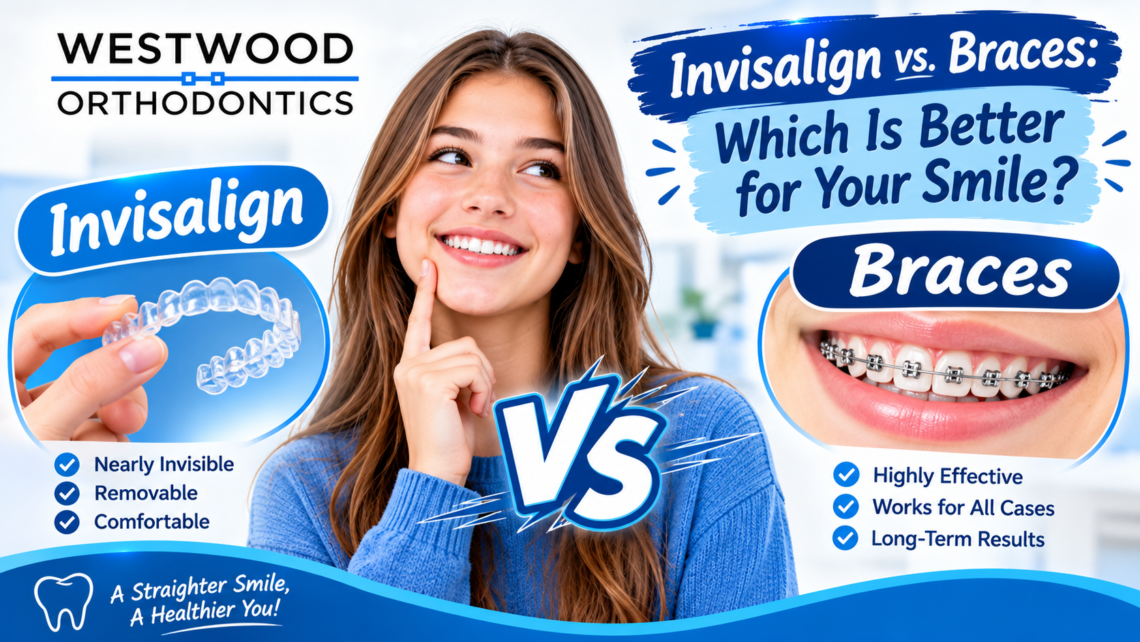
No two smiles are ever the same, so neither Invisalign nor braces will work for everyone. Braces are typically stronger for more complex bite issues or crowding. And Invisalign is generally a better choice if you have mild to moderate crowding and want something removable and discreet. The right choice depends on your teeth and habits.
Still, choosing between the two can be confusing, especially with so much marketing, and many people believe one beats the other. Here, we will discuss the differences between them, how they handle crowding and biting, and how they compare in comfort and cleaning. At the end, you will have an understanding of the questions to ask when visiting and what to find on each path.
The biggest difference is that Invisalign uses removable clear plastic trays, while braces use brackets and wires attached to the teeth day and night. Both move teeth slowly, but they feel and fit very differently in daily life.
Feature | Invisalign | Traditional Braces |
| How it works | Removable, custom-made clear trays | Fixed brackets joined by wires |
| Appearance | Nearly invisible | More noticeable; ceramic blends in |
| Comfort | Smooth plastic, less irritation | Soreness after adjustments |
| Eating | Remove trays, eat normally | Avoid sticky and hard foods |
| Daily effort | Wear 20 to 22 hours a day | Works 24/7, no removal |
| Best for | Mild to moderate crowding, small gaps | Complex cases, severe crowding, bite changes |
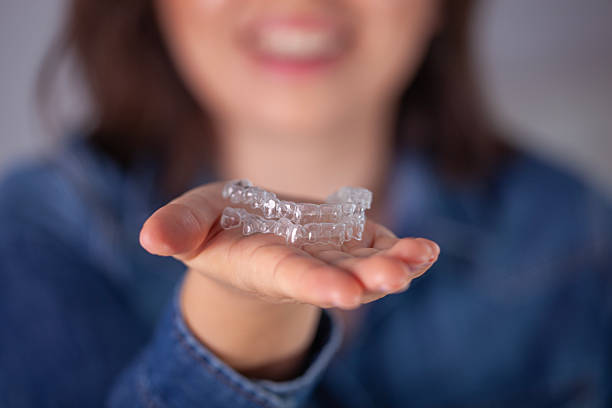
Invisalign uses a series of custom-made, transparent plastic trays that gradually move your teeth a little at a time. A new tray is used every 1-2 weeks, and each tray will move teeth a little further.
Your orthodontist uses scans or impressions before treatment begins and outlines the treatment steps, which you can view from the start. As the trays are removed, it is up to you to have a successful outcome. Most people should wear them 20-22 hours a day; otherwise, progress slows down. According to Invisalign, adult treatment typically takes 12 to 18 months and can be finished faster than braces. But if you leave a tray in a case instead of in your mouth, it won’t move your teeth, so consistency is key.
Traditional braces bond small brackets to your teeth and connect them with a wire that applies constant pressure, gradually moving them into their new positions. Your orthodontist will adjust the wire at every visit.
Once fixed, braces work 24/7, even if you don’t remember to wear them. Available in metal or ceramic, modern brackets are smaller and more comfortable than older ones. You also go to the office regularly for adjustments, allowing your orthodontist to closely monitor your progress. According to the same Invisalign page, braces can treat many dental issues and take 12 to 36 months.
If crowding is mild to moderate, Invisalign is a good option, while braces are often preferred for severe crowding. The amount of space available determines which option will fit. With mild crowding, aligners can shift teeth into place comfortably, and small gaps often close during treatment. If teeth are crowded, they need more movement (larger or more controlled movements), and fixed braces give your orthodontist more control. If space needs to be created for tooth movement, your orthodontist may recommend extractions. Your orthodontist will tell you if your case needs extractions.
Braces are the more reliable choice for severe bite issues such as deep overbites, underbites and crossbites, while Invisalign is suitable for milder cases. The harder the bite, the more control you will need.
The evidence supports some caution. In a review of 4 studies and 270 patients, a National Elf Service summary showed little evidence on clear aligners, while one of the studies of 48 patients found that patients who were treated with Invisalign did not have the same outcomes for malocclusion as those treated with conventional braces. That is, aligners suit many cases but not all. The same review also found shorter treatment times and fewer visits in mild to moderate cases, which aligns with what many orthodontists observe in practice.
Compared to braces, Invisalign is more comfortable because it is made of smooth plastic and won’t irritate your cheeks and gums. Both options can still cause some pressure when you start or switch trays. Braces can cause temporary soreness, especially after adjustments, and brackets may irritate your lips. Over-the-counter pain relievers ease the first few days; soft foods and orthodontic wax help. Invisalign users suffer pressure as well, typically for one day or two between each set of trays. Most people will adapt in 1 week or 2 anyway.
Invisalign lets you remove the trays for normal brushing, flossing, and cleaning. The trays are also easier to clean than braces, which require special attention around brackets and wires. Either will need good hygiene.
While there is no hard rule, the Invisalign page says that you can eat the majority of foods with aligners; with braces, you can’t eat crunchy or sticky foods like gummy candy or popcorn. Plaque builds up faster with overcrowded or covered teeth; the little things add up. The following are the primary habits for each:
With Invisalign, brush your teeth before you put the trays in, and clean the trays daily. With braces, brush after meals, angle your brush around each brace, and use floss threaders or interdental brushes.

Choose the one that fits your bite, lifestyle, and ability to stick to the plan. Invisalign works best for disciplined patients with mild crowding or spacing issues, while braces suit more complex bites or anyone who knows they might forget to wear aligners.
To figure out what fits you, ask yourself these questions before your visit:
Once you have answers to these questions, an exam will give you a clear recommendation. In a single visit, you can compare costs, treatment time, and goals. You will not have any pressure to decide right then, and you can ask as many questions as you want. At Westwood Orthodontics, we walk you through both options step by step. Book an appointment to find out which option fits you best.
For mild to moderate cases, Invisalign works really well. For more complex movements, braces still have stronger evidence. Only your orthodontist can select the right option for you after an exam.
Invisalign deals with many mild overbites. Deeper overbites can be fixed with braces or other appliances.
For adults, Invisalign is often faster, usually 12 to 18 months, compared with 12 to 36 months for braces. Your exact timeline is still based on your case.
Sure. Adults can pick traditional braces at any age. Many adults choose ceramic brackets for a less noticeable look, and they work the same way as metal braces in most cases.
Braces work, and so does Invisalign – neither is right for everyone. If you have a milder case, you may opt for an Invisalign treatment, which is both removable and simple to take care of. If you have a more complicated case, you need braces for more complete control. Let your bite, daily habits, and goals guide your decision. A personal exam is an extra step to help with clarity.
Westwood Orthodontics can help you compare your options and choose with confidence. Schedule a consultation with Westwood Orthodontics today.
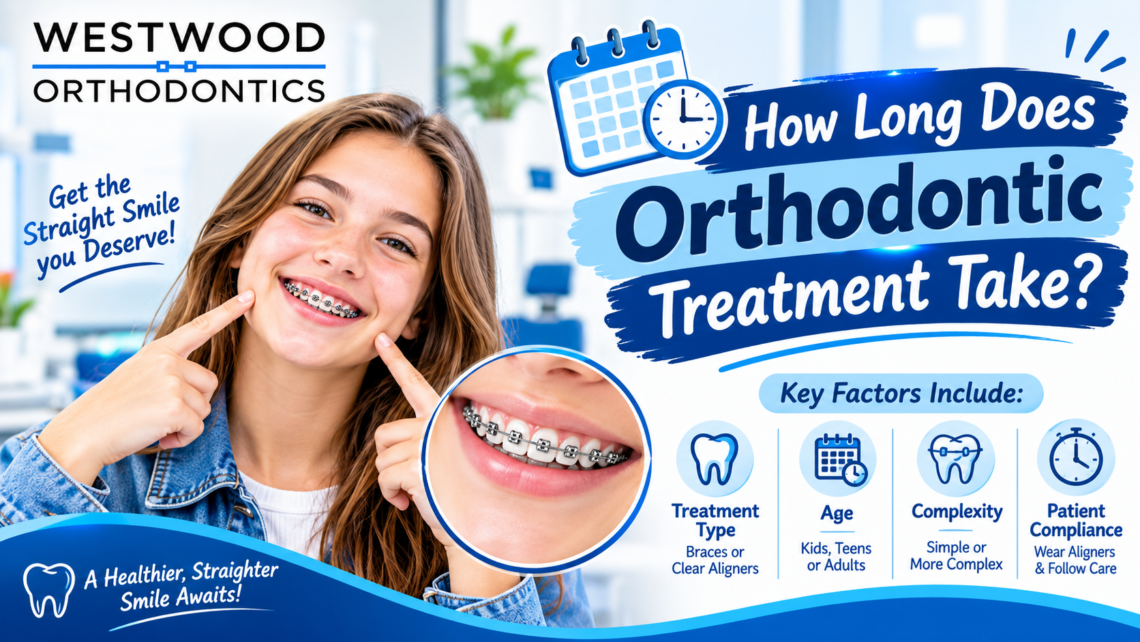
The exact orthodontic treatment timeline depends on your teeth, your bite, and the treatment you are receiving. But most patients complete orthodontic treatment in 12 to 24 months. However, mild cases may finish in 6 months, and complex cases may take more than 3 years.
Naturally, most people want a clear number before they start. That’s a fair question, since treatment affects school, work, and social plans. In this guide, we will discuss the average time for braces and Invisalign, factors that speed up or slow down treatment, and what happens if your teeth don’t shift. This way, you can make informed decisions and set realistic expectations to avoid surprises in your planning.
The average timeline for braces treatment is about 18 to 24 months, and it can take longer for complicated cases, up to 36 months. The amount of tooth movement needed and the complexity of your bite determine the range. Braces are on 24 hours a day, so they work even during a hectic week.
According to Invisalign, braces take anywhere from 12 to 36 months, depending on the case. Mild cases, those with minor crowding or small gaps, are often completed in 6–12 months, the shortest time period most will see, while moderate cases take 12–24 months. Major jaw differences or significant crowding may require 24-36 months or more. Please remember that these ranges are estimates only and can be further refined after your orthodontist examines you. The following table shows the average treatment duration for each type.
Treatment with Invisalign typically lasts 6 to 18 months in mild to moderate cases. Invisalign treatment for adults takes about 12 to 18 months and is finished quicker than braces. However, results depend on wearing the aligners for approximately 20-22 hours each day. No wear time means slower progress and possibly additional trays. Cases can also be more complex when other instruments are used, such as elastics or small attachments on the teeth, which can lengthen treatment. Invisalign is removable, so it is flexible, but it also gives you control over the pace.
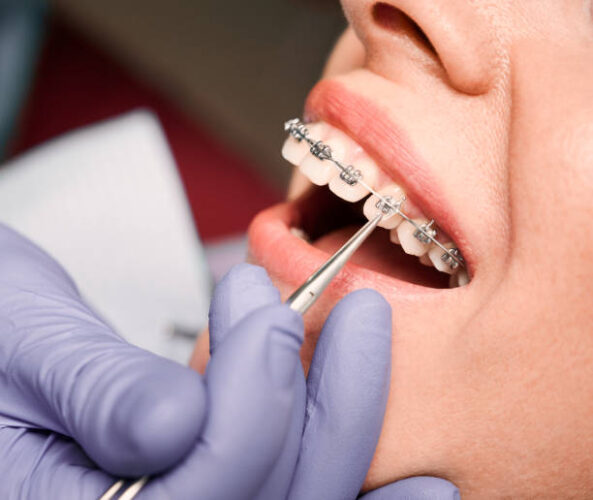
Treatment time depends mainly on tooth crowding, bite complexity, the type of treatment, and your compliance with instructions. All of these can add or subtract months, so two people with the same type of braces may finish treatment in different amounts of time.
Mild crowding needs small movements, so treatment takes less time. Severe crowding requires teeth to move farther, and sometimes you need to make room first. As a result, crowded smiles take longer. Mild crowding or small gaps can be completed within a year or less.
Many patients are surprised that a bite fixing takes longer than straightening teeth. In overbites, underbites, and crossbites, the problem may be the jaw, which complicates the plan because bone changes more slowly than teeth. For major jaw differences, 24 to 36 months or more are enough
Aligners and braces move teeth at different speeds. A National Elf Service summary of a review reporting results from 4 studies and 270 patients found that braces took longer, but the difference wasn’t clear-cut. In mild to moderate cases, aligners can shorten treatment time and require fewer visits, but the evidence doesn’t show they work quickly in all situations.
Your habits are more important than you think, and they’re the part of the timeline you shape. If you have broken brackets or gum inflammation, you will need more visits, but wearing them regularly keeps everything running smoothly. These steps help to ensure that treatment is on schedule:
Missed appointments mean that treatment will be delayed as teeth continue to move in the correct direction. Most patients visit every 4-8 weeks, and missing visits slows progress. Teeth may not move or may go off track if a new set of aligners or a wire change is late. Repeated delays can add months by the end, and rescheduling will keep the delay small. If you miss a visit, it is not a big deal, but if it becomes a habit, it is. When your schedule is hectic, tell the office in advance so you can schedule a time that works for you. Many practices offer flexible hours, and a quick call is always better than no call.
Treatment time also depends on age and may be shorter for children and teens as their jawbones are still developing. Treatments may take a little longer with denser adult bone. But adults can enjoy some fantastic results. Once the teeth are healthy, they can move at any age, and adults tend to be regular with their wear time and appointments, allowing treatment to stay on track. Teens, on the other hand, can move quickly but may also struggle to wear them, which parents can help with reminders.
If teeth don’t move as expected, your orthodontist will look into why and adjust the plan. Slow movement is common, and it can usually be corrected without starting over. Don’t worry if progress seems slow, because every mouth responds differently. Your orthodontist might take new scans or X-rays to see what is going on. Depending on what they find, your plan may change in one of these ways:
Once active treatment is done, you will also take a retainer. You will wear it full-time at first, then only at night, so your teeth don’t shift back. That retention phase is part of the full timeline, so it is good to plan for it from the start.
Only for very mild cases. Most people need 12 months or more, and moderate cases are usually closer to 18-24 months.
For mild to moderate cases, Invisalign often takes less time. Complex cases can take as long as braces, or even longer.
Most patients come in every 4 to 8 weeks, depending on the treatment type and the plan your orthodontist sets.
You can help a lot by following instructions, wearing your aligners and elastics exactly as instructed, and keeping your appointments. Avoid any shortcuts your orthodontist hasn’t approved. Moving teeth too fast can damage roots and gums. Your orthodontist can tell you what options are really safe for you.
Most orthodontic treatment takes 12 to 24 months. Mild cases can finish sooner; complex ones can take longer. Your tooth crowding, bite, treatment type, age, and daily habits all affect the timeline, and wearing your retainer maintains your results afterwards. Being consistent is the best way to finish on time, and a personal exam can give you an exact estimate. Westwood Orthodontics can map out a realistic timeline for your smile. Schedule a consultation with Westwood Orthodontics today.
Recent Comments